01 /
The Hidden Gap Between “Recyclable” and Circular:
Recyclable is not the same as circular
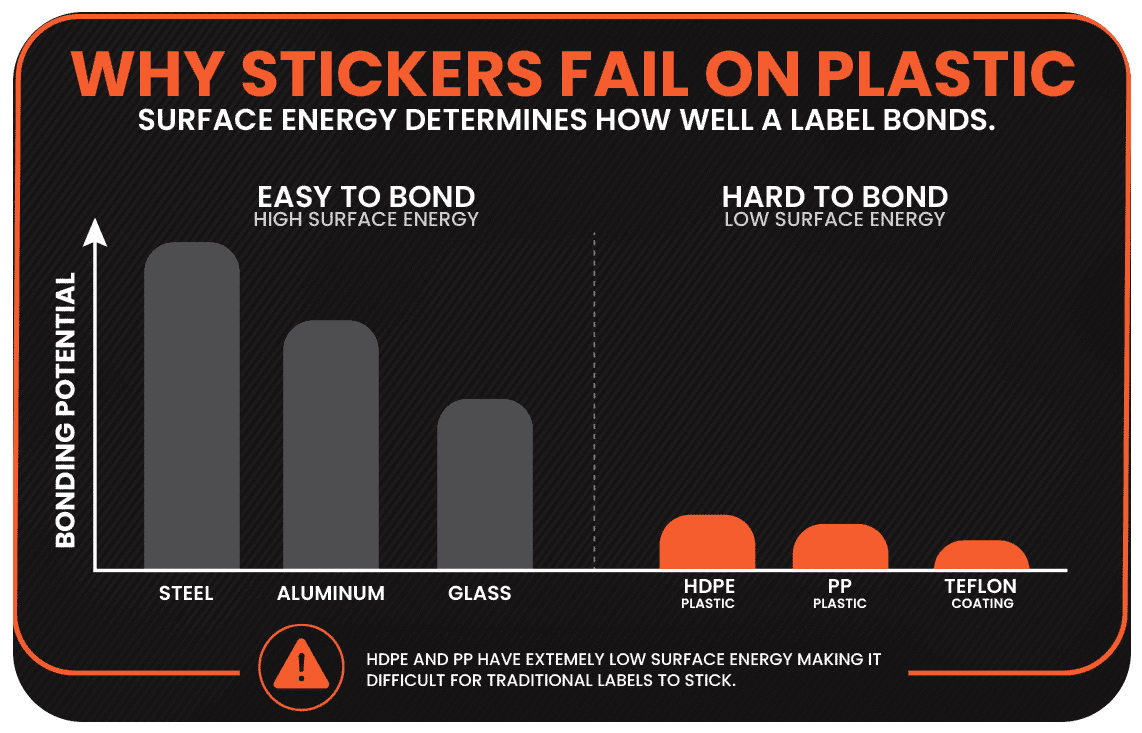
Most conventional labels used in industrial packaging today are technically recyclable along with reusable polymer assets.
But recyclable is not the same as circular.
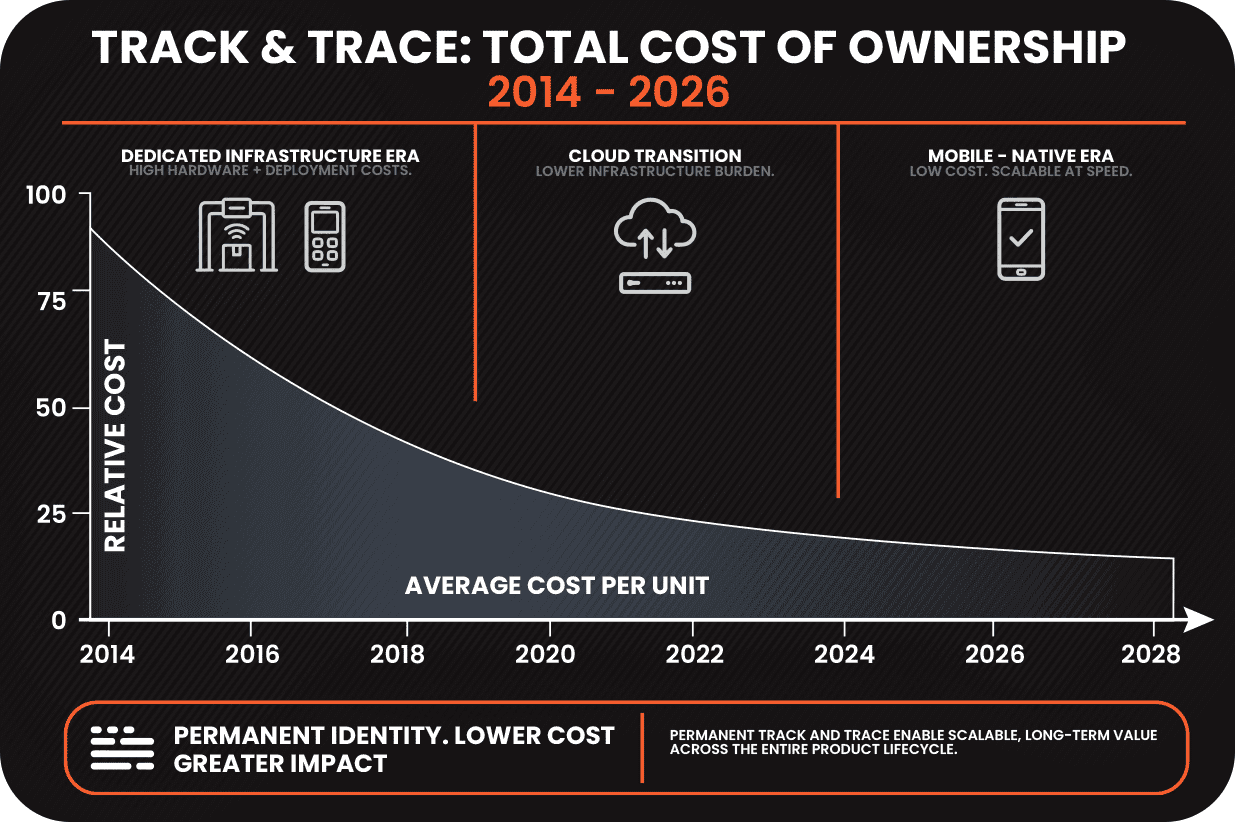
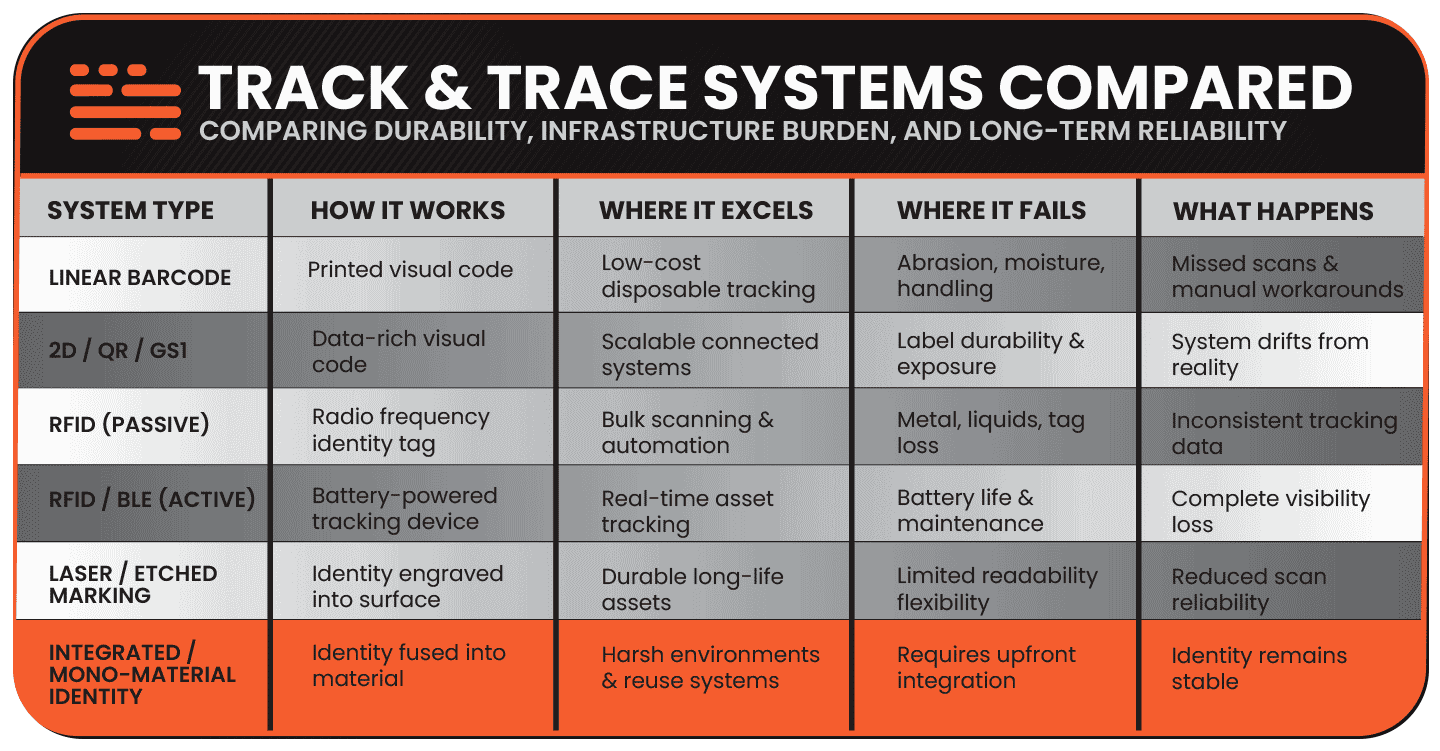
Many traditional labeling systems combine films, adhesives, coatings, and inks that complicate recovery and recycling processes. In reusable systems, the label often fails long before the asset itself, creating recurring labor, operational interruptions, and additional material waste.
More importantly, when the label degrades or detaches, the identification layer disappears with it weakening the larger tracking and compliance systems connected to the asset.
This is where EPR changes the conversation. The challenge is no longer whether a package can be recycled once.
The challenge is whether the entire packaging system—including its identity layer—can remain durable, traceable, and materially compatible throughout years of operational use and eventual recovery.
02 /
A Different Approach:
Identity at the Material Level
Mono material labeling approaches the problem differently.
Instead of applying a separate label onto plastic, the identification layer is fused directly into the compatible plastic substrate itself. No adhesive layer. No secondary film. No separation at end-of-life.
The identity becomes part of the product itself.
This revelation supports cleaner recycling streams, reduces relabeling labor, improves long-term readability, and helps create packaging systems where identity persists alongside the asset lifecycle.
HDPE
Rigid, chemical resistant, and widely used in totes, drums, bins, and reusable packaging.
PP
Lightweight and fatigue resistant; common in crates, closures, molded parts, and medical products.
TPO
A durable olefin blend used where impact resistance, weathering, and complex geometry matter.
TPV
Flexible and resilient for soft-touch components, seals, interior automotive parts, and overmolding.
03 /
The Bigger Revelation
What is the next challenge
For years, the packaging industry focused on making products recyclable. The next challenge is making them permanently identifiable throughout their lifecycle.
Because modern supply chains are beginning to recognize a foundational reality: Data systems are only as reliable as the physical identity layer supporting them.
As reusable packaging and EPR systems continue to expand, packaging identity is evolving from a labeling decision into infrastructure.