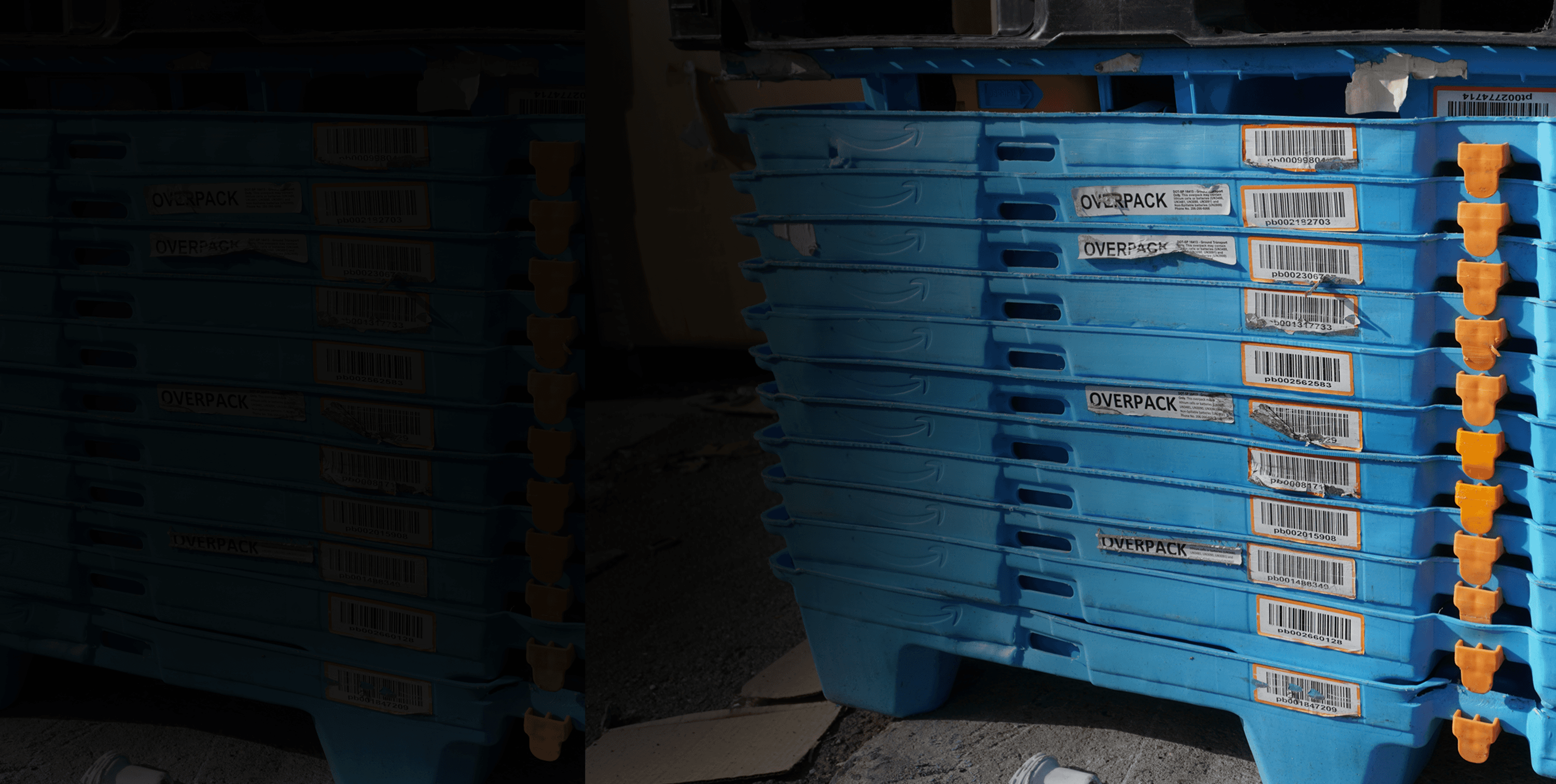
WHY LABELS FAIL
WHY LABELS FAIL
LABELS WERE NEVER DESIGNED FOR PLASTIC
LABELS WERE NEVER DESIGNED FOR PLASTIC
PLASTIC WAS ENGINEERED TO RESIST LABELS
PLASTIC WAS ENGINEERED TO RESIST LABELS
Low-surface-energy plastics like HDPE, PP, UHMWPE, and TPO are specifically engineered to resist bonding, chemicals, moisture, and friction. Those same properties make long-term label adhesion inherently difficult.
As the product expands, flexes, heats, cools, washes, and ages, the label often becomes the weakest layer in the system.
Low-surface-energy plastics like HDPE, PP, UHMWPE, and TPO are specifically engineered to resist bonding, chemicals, moisture, and friction. Those same properties make long-term label adhesion inherently difficult.
As the product expands, flexes, heats, cools, washes, and ages, the label often becomes the weakest layer in the system.
LABEL FAILURE
DAY ONE IS EASY. YEAR FIVE IS HARD.
MOST LABELS LOOK ACCEPTABLE IMMEDIATELY AFTER APPLICATION.
Failure appears over time through abrasion, UV exposure, chemicals, wash cycles, repeated handling, and environmental stress. Adhesives weaken. Graphics fade. Barcodes become unreadable. Cosmetic damage becomes operational risk.
LABEL FAILURE
DAY ONE IS EASY. YEAR FIVE IS HARD.
MOST LABELS LOOK ACCEPTABLE IMMEDIATELY AFTER APPLICATION.
Failure appears over time through abrasion, UV exposure, chemicals, wash cycles, repeated handling, and environmental stress. Adhesives weaken. Graphics fade. Barcodes become unreadable. Cosmetic damage becomes operational risk.
OPERATIONAL FAILURE
LABEL FAILURE BECOMES OPERATIONAL FAILURE
WHEN LABELS FAIL, OPERATIONS COMPENSATE THROUGH MANUAL WORKAROUNDS, RELABELING, RESCANNING, CUSTOMER COMPLAINTS, LOST PRODUCTIVITY, AND DATA GAPS. MODERN LABELS CARRY FAR MORE THAN BRANDING.
They now support warnings and safety, regulatory compliance, serial tracking, automation, inventory systems, GS1 and 2D barcode initiatives, digital traceability, and hygiene protocols.

OPERATIONAL FAILURE
LABEL FAILURE BECOMES OPERATIONAL FAILURE
WHEN LABELS FAIL, OPERATIONS COMPENSATE THROUGH MANUAL WORKAROUNDS, RELABELING, RESCANNING, CUSTOMER COMPLAINTS, LOST PRODUCTIVITY, AND DATA GAPS. MODERN LABELS CARRY FAR MORE THAN BRANDING.
They now support warnings and safety, regulatory compliance, serial tracking, automation, inventory systems, GS1 and 2D barcode initiatives, digital traceability, and hygiene protocols.
OPERATIONAL FAILURE
LABEL FAILURE BECOMES OPERATIONAL FAILURE
WHEN LABELS FAIL, OPERATIONS COMPENSATE THROUGH MANUAL WORKAROUNDS, RELABELING, RESCANNING, CUSTOMER COMPLAINTS, LOST PRODUCTIVITY, AND DATA GAPS. MODERN LABELS CARRY FAR MORE THAN BRANDING.
They now support warnings and safety, regulatory compliance, serial tracking, automation, inventory systems, GS1 and 2D barcode initiatives, digital traceability, and hygiene protocols.

LONG-TERM PERFORMANCE
PLASTIC REPELS ADHESIVE.
AT THE MOLECULAR LEVEL, POLYOLEFINS ARE ENGINEERED TO RESIST BONDING.
Their low surface energy helps repel moisture, chemicals, abrasion, and environmental stress—which is exactly why traditional adhesive systems struggle to maintain long-term performance. Surface energy measures the molecular attraction between materials and is commonly expressed in dynes/cm. Polyfuze approaches the problem differently by integrating compatible materials together at the polymer level rather than relying on surface attachment.
LONG-TERM PERFORMANCE
PLASTIC REPELS ADHESIVE.
AT THE MOLECULAR LEVEL, POLYOLEFINS ARE ENGINEERED TO RESIST BONDING.
Their low surface energy helps repel moisture, chemicals, abrasion, and environmental stress—which is exactly why traditional adhesive systems struggle to maintain long-term performance. Surface energy measures the molecular attraction between materials and is commonly expressed in dynes/cm. Polyfuze approaches the problem differently by integrating compatible materials together at the polymer level rather than relying on surface attachment.
WHY STICKERS FAIL ON PLASTIC
SURFACE ENERGY DETERMINES HOW WELL A LABEL BONDS.
HDPE AND PP HAVE EXTREMELY LOW SURFACE ENERGY MAKING IT DIFFICULT FOR TRADITIONAL LABELS TO STICK.
WHY STICKERS FAIL ON PLASTIC
SURFACE ENERGY DETERMINES HOW WELL A LABEL BONDS.
HDPE AND PP HAVE EXTREMELY LOW SURFACE ENERGY MAKING IT DIFFICULT FOR TRADITIONAL LABELS TO STICK.

PERFORMANCE STANDARDS
YESTERDAY’S STANDARDS FOR TODAY’S MATERIALS
Legacy label tests were never designed for reusable plastics, automation, or lifecycle traceability. Modern supply chains require identity systems that perform beyond short-term adhesion.
PERFORMANCE STANDARDS
YESTERDAY’S STANDARDS FOR TODAY’S MATERIALS
Legacy label tests were never designed for reusable plastics, automation, or lifecycle traceability. Modern supply chains require identity systems that perform beyond short-term adhesion.
PERFORMANCE STANDARDS
YESTERDAY’S STANDARDS FOR TODAY’S MATERIALS
Legacy label tests were never designed for reusable plastics, automation, or lifecycle traceability. Modern supply chains require identity systems that perform beyond short-term adhesion.
MATERIAL INTEGRATION
ADHESION VS INTEGRATION
MOST LABELING SYSTEMS REMAIN SEPARATE LAYERS ATTACHED TO THE SURFACE OF A PRODUCT.
Time is the enemy of surface-applied labels. Polyfuze integrates compatible polyolefin identity directly into the material, creating a permanent mono-material structure designed for the life of the asset.
MATERIAL INTEGRATION
ADHESION VS INTEGRATION
MOST LABELING SYSTEMS REMAIN SEPARATE LAYERS ATTACHED TO THE SURFACE OF A PRODUCT.
Time is the enemy of surface-applied labels. Polyfuze integrates compatible polyolefin identity directly into the material, creating a permanent mono-material structure designed for the life of the asset.
AFTER YEARS OF SERVICE
AFTER YEARS OF SERVICE

POLYFUZE AFTER YEARS OF SERVICE
The crate may show wear. The identification does not.

TRADITIONAL SURFACE LABELS
When identification depends on surface adhesion, wear becomes a liability.
POLYFUZE AFTER YEARS OF SERVICE
The crate may show wear. The identification does not.
Branding remains recognizable. QR codes remain functional. Track-and-trace data remains accessible. No peeling, edge lift, or delamination. Identification remains part of the asset.
TRADITIONAL SURFACE LABELS
When identification depends on surface adhesion, wear becomes a liability.
Labels scratch and abrade. Graphics become difficult to read. QR codes become unreliable. Edge lift and delamination can occur. Asset identification degrades over time.
POLYFUZE AFTER YEARS OF SERVICE
The crate may show wear. The identification does not.
TRADITIONAL SURFACE LABELS
When identification depends on surface adhesion, wear becomes a liability.

MATERIAL COMPATIBILITY IS EVERYTHING
DURABILITY BEGINS WITH MATERIAL COMPATIBILITY.
When the graphic and substrate are chemically compatible, identity becomes integrated into the product itself rather than attached to the surface.
MATERIAL COMPATIBILITY IS EVERYTHING
DURABILITY BEGINS WITH MATERIAL COMPATIBILITY.
When the graphic and substrate are chemically compatible, identity becomes integrated into the product itself rather than attached to the surface.

THIS IS MONO-MATERIAL.
NO ADHESIVES. NO SECONDARY LAYER. NO DELAMINATION PATHWAY.
The result is improved durability, readability, hygiene, and lifecycle performance across demanding operating environments where traditional labels often fail.
THIS IS MONO-MATERIAL.
NO ADHESIVES. NO SECONDARY LAYER. NO DELAMINATION PATHWAY.
The result is improved durability, readability, hygiene, and lifecycle performance across demanding operating environments where traditional labels often fail.
Our team is here to help.
EXPLORE YOUR SYSTEM REQUIREMENTS
Every application environment creates different demands around durability, readability, lifecycle performance, and material compatibility.
Thanks — we've got it.
Someone from our engineering team will review your project and follow up shortly.
Our team is here to help.
EXPLORE YOUR SYSTEM REQUIREMENTS
Every application environment creates different demands around durability, readability, lifecycle performance, and material compatibility.
Thanks — we've got it.
Someone from our engineering team will review your project and follow up shortly.
Our team is here to help.
EXPLORE YOUR SYSTEM REQUIREMENTS
Every application environment creates different demands around durability, readability, lifecycle performance, and material compatibility.
Thanks — we've got it.
Someone from our engineering team will review your project and follow up shortly.