Case Study.
When Safety Warnings Fade, Risk Doesn’t.
Why Visibility Over Time Is the Missing Variable in Retail Safety Systems
Executive Summary
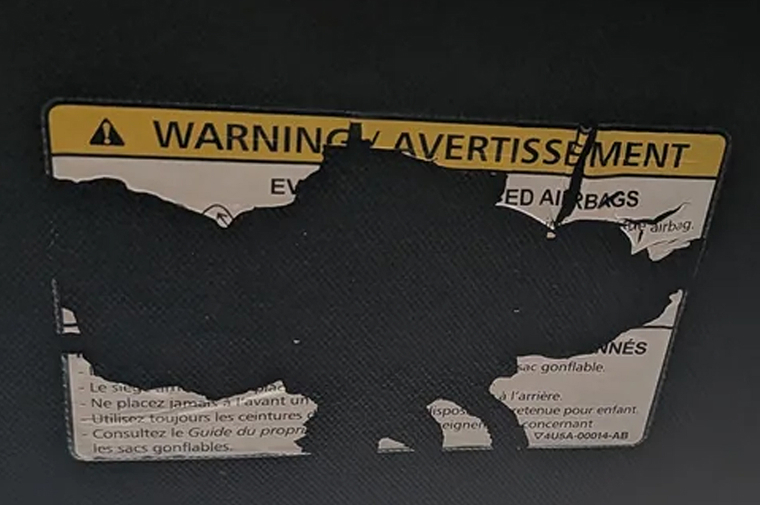
A major U.S. retailer operating millions of shopping carts faced a persistent issue: safety warnings degraded long before the asset reached end of life.
The carts were durable. The warnings were not.
Over time:
UV exposure, rain and snow,
cleaning chemicals and
daily use
caused safety messaging to fade, peel, or disappear.
This created a growing gap between asset life (10–13 years) and message life (<1 year). The result was not just degraded communication—but increased liability.
By integrating identity directly into the material, the retailer ensured permanent safety visibility—aligning communication durability with asset lifespan.
1. The Nature of Public Safety Systems
Retail safety systems rely on visibility.
Warnings must be:
clear
persistent
accessible
And most importantly: Present at the moment of risk.
2. The Gradual Disappearance of Safety
Traditional labeling did not fail immediately. It faded.
Gradually:
colors dulled
text became unreadable
labels disappeared entirely
This created a dangerous condition: The system appeared compliant—but was no longer communicating.
3. The Lifecycle Gap
Shopping carts are designed for long-term use. Safety labels are not.
This creates a structural gap. A long-life asset paired with a short-life warning system.
And over time:
compliance erodes
risk increases
liability expands
4. Making Safety Permanent
The solution required aligning message durability with asset durability.
Identity was embedded into the material:
no fading
no peeling
no degradation pathway
Warnings became: A permanent feature of the asset.
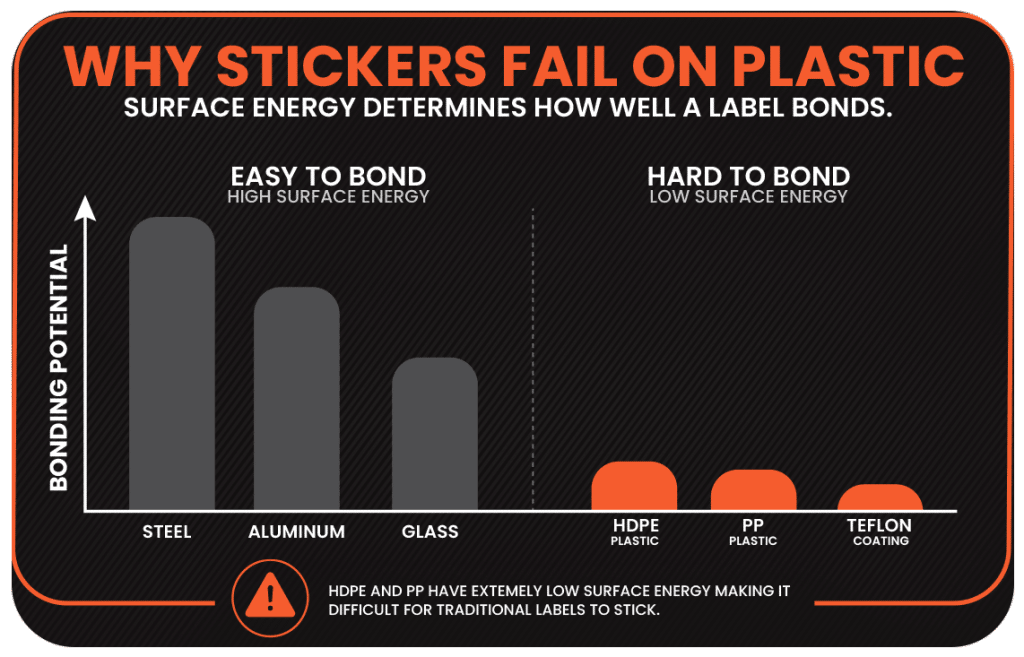
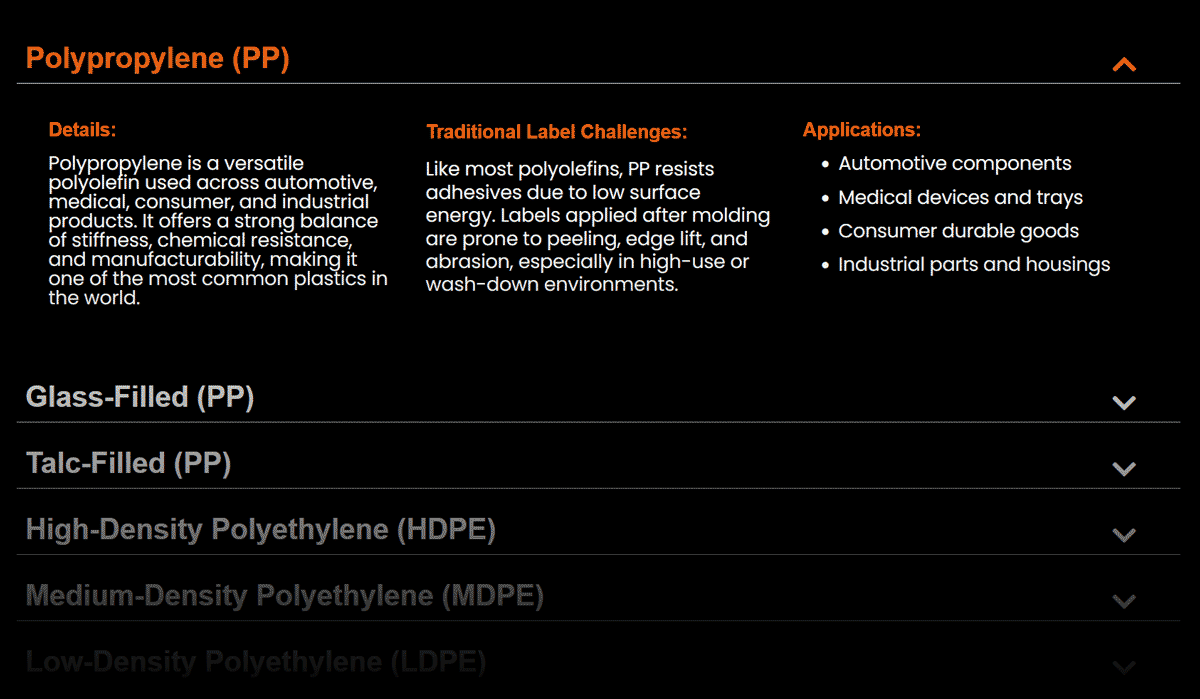
Polyfuze’s revolutionary Mono Material labeling technology represents a major breakthrough in sustainable industrial packaging. Unlike traditional labels that use incompatible materials and adhesives, Polyfuze permanently fuses branding, barcodes, RFID and compliance information directly into the surface of polyolefin products like HDPE and PP.
The result is a label that never peels, fades, or contaminates the recycling stream—ensuring full compatibility with closed-loop and circular economy goals.
Engineered for demanding use cases such as pallets, totes, crates, and IBCs, Polyfuze empowers OEMs and end users to meet rising sustainability standards without sacrificing durability, traceability, or performance. As the only labeling solution of its kind, Polyfuze is redefining what’s possible in recyclable, reusable packaging.
Established in 1983, we bring over four decades of expertise in plastics labeling and graphics. Our founder’s entrepreneurial spirit remains a driving force in our culture, fueling a commitment to innovation that begins with listening closely to our customers.
Tell us about your application and we’ll help you determine if Polyfuze is the right fit.
We’ll review:
Material compatibility
Labeling method
Volume and scale
Implementation approach
Easy To Apply - Polyfuze Labeling Using the VERSAFLEX System
Easy To Apply Polyfuze Labels - Using Standard Hot Stamp / Heat Transfer Equipment
Free SEM Analysis Data For Fusion Labeling!
Complete the form below and we will send you the full SEM Analysis data to help you learn why Fusion Labeling can help solve your polyolefin labeling problems.