Case Study.
When Safety Information Has a Half-Life, Risk Becomes Inevitable
Designing Identity That Lasts as Long as the Product It Protects
Executive Summary
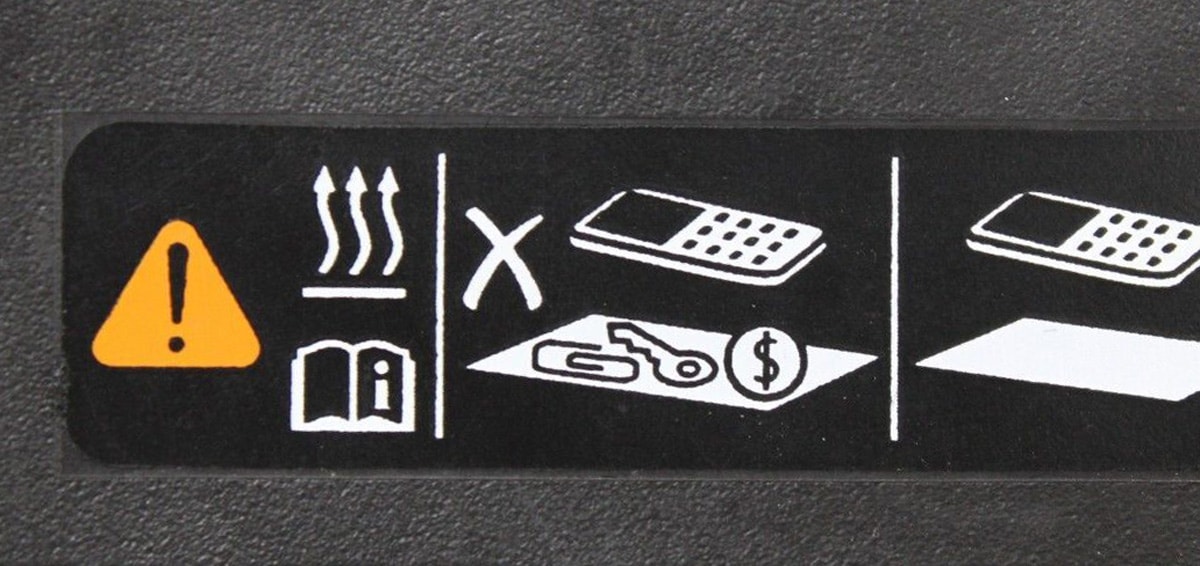
A global automotive manufacturer faced a persistent issue with safety labeling on interior and component surfaces, specifically in environments exposed to chemicals such as sunscreen, insect repellent, and human contact. GM has an expectation that a part label last 15 years, the life expectancy of the product.
While most labels passed initial validation, they degraded over time.
Not immediately. Not visibly at first. But predictably.
The challenge was not compliance at installation; it was compliance over time.
By transitioning to material-integrated identity, the organization achieved life-of-vehicle durability across [6.5M+] components, aligning safety information with the lifecycle of the product itself. Polyfuze was the only label supplier to qualify.
1. The Quiet Failure of Safety Systems
Safety labels rarely fail on day one. They fail slowly.
Through:
chemical exposure
abrasion
UV degradation
repeated human interaction
At first, the impact is cosmetic. Then it becomes functional.
Text fades.
Edges lift.
Information disappears.
And when that happens: The system loses its ability to communicate risk.
2. The Lifecycle Mismatch
Automotive systems are engineered with long-term intent:
10–15 year lifespans
exposure to real-world conditions
strict regulatory expectations
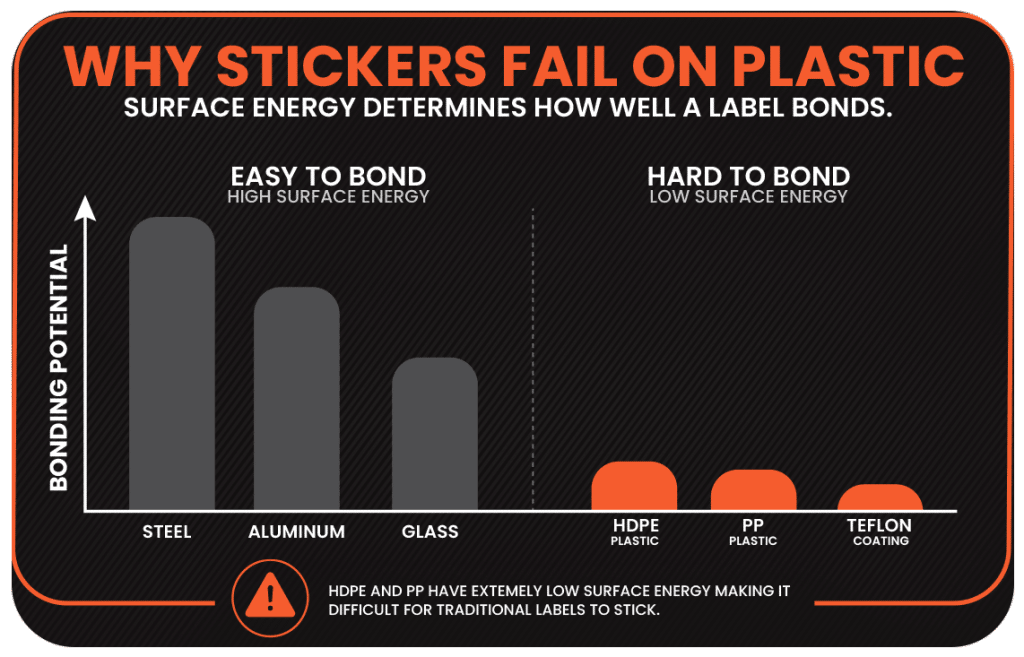
But traditional labels are not engineered for that same lifecycle.
They are:
surface-dependent
adhesive-reliant
degradation-prone
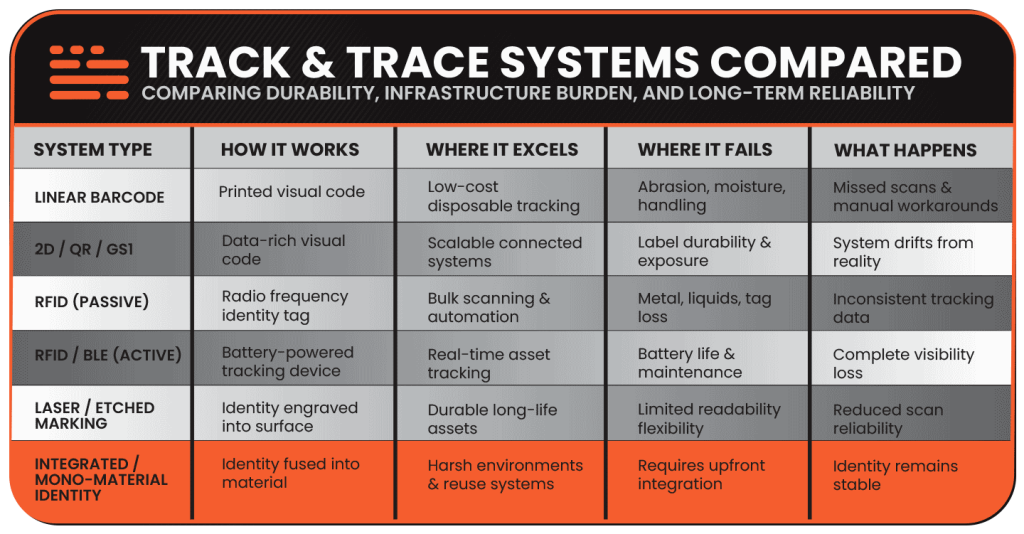
This creates a critical misalignment: Short-term identity applied to long-term systems. In safety-critical environments, this is not a minor flaw. It is a structural risk.
3. Redefining Identity as a Permanent Layer
Rather than attempting incremental improvements in label chemistry, the approach shifted entirely. Identity was no longer treated as:
a printed layer
a surface application
a replaceable component
Instead, it became: A permanent feature of the material itself through mono material marking:
safety information could not peel
chemical exposure had no interface to attack
lifecycle durability matched component design
4. Impact at Scale
Performance
Permanent legibility across full product lifecycle Resistance to chemical exposure (sunscreen, repellents, etc.)
Regulatory
Compliance with [GMW standards / equivalent] Qualification as “life-of-vehicle” identity
Scale
Deployment across [6.5M+] components globally
Engineering
Shift from “label selection” to identity system design
Polyfuze’s revolutionary Mono Material labeling technology represents a major breakthrough in sustainable industrial packaging. Unlike traditional labels that use incompatible materials and adhesives, Polyfuze permanently fuses branding, barcodes, RFID and compliance information directly into the surface of polyolefin products like HDPE and PP.
The result is a label that never peels, fades, or contaminates the recycling stream—ensuring full compatibility with closed-loop and circular economy goals.
Engineered for demanding use cases such as pallets, totes, crates, and IBCs, Polyfuze empowers OEMs and end users to meet rising sustainability standards without sacrificing durability, traceability, or performance. As the only labeling solution of its kind, Polyfuze is redefining what’s possible in recyclable, reusable packaging.
Established in 1983, we bring over four decades of expertise in plastics labeling and graphics. Our founder’s entrepreneurial spirit remains a driving force in our culture, fueling a commitment to innovation that begins with listening closely to our customers.
Tell us about your application and we’ll help you determine if Polyfuze is the right fit.
We’ll review:
Material compatibility
Labeling method
Volume and scale
Implementation approach
Easy To Apply - Polyfuze Labeling Using the VERSAFLEX System
Easy To Apply Polyfuze Labels - Using Standard Hot Stamp / Heat Transfer Equipment
Free SEM Analysis Data For Fusion Labeling!
Complete the form below and we will send you the full SEM Analysis data to help you learn why Fusion Labeling can help solve your polyolefin labeling problems.