

Solution Spotlight:
Truck Storage Engineered Like Heavy Equipment.
The Identity Had to Keep Up.
DECKED built its reputation on durability. From branding and instructions to serial numbers and product identification, every graphic needed to perform with the same long-term reliability as the product itself.
Executive Summary:
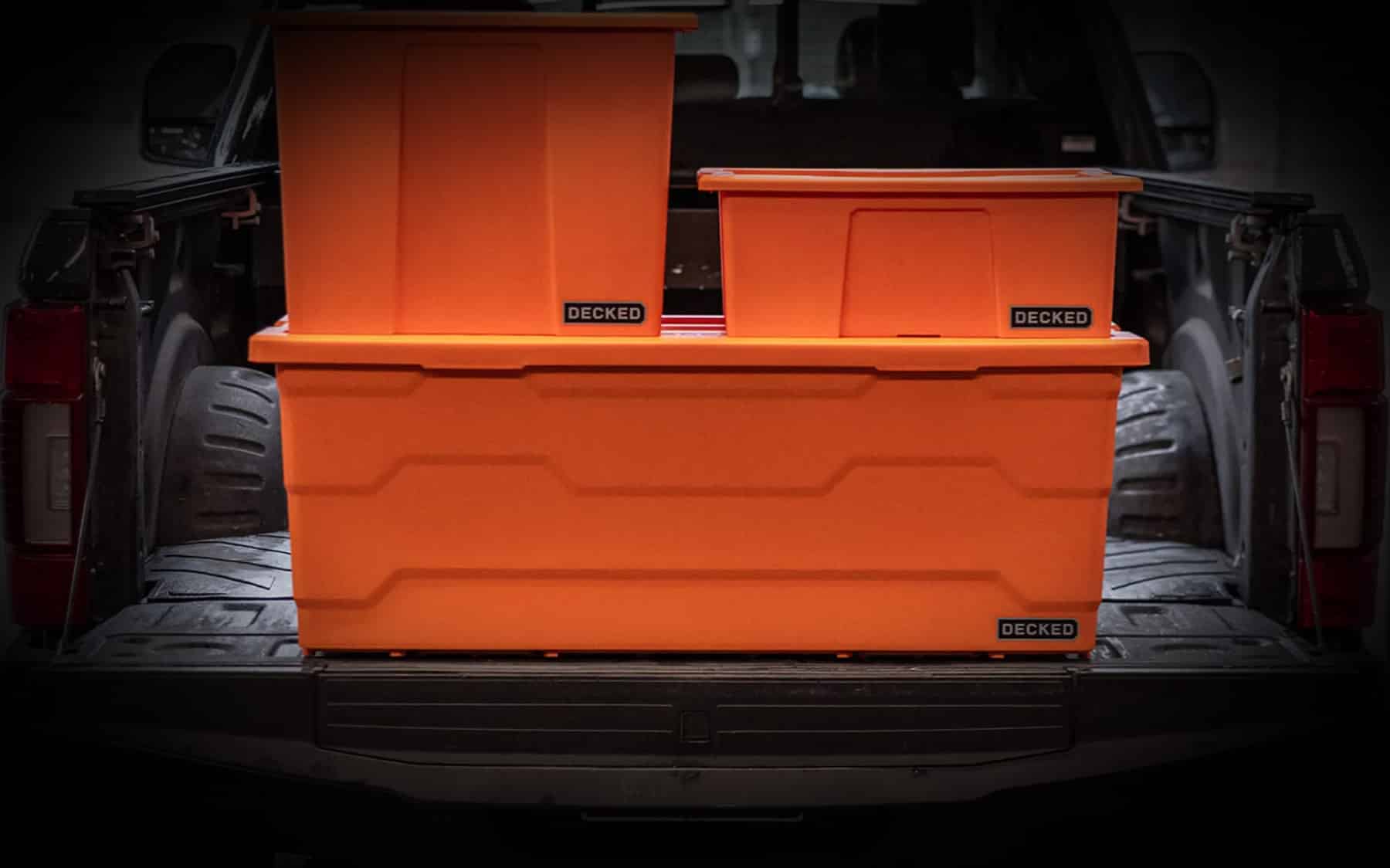
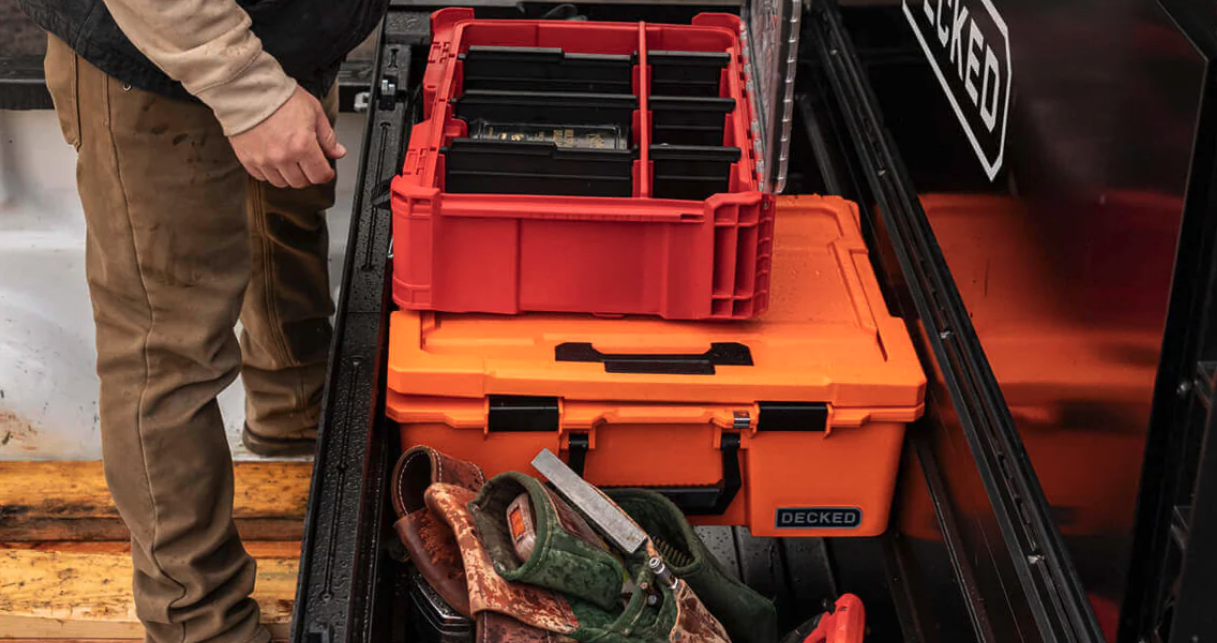
DECKED builds truck storage systems for a world that is not gentle with products. Sun. Weather. Dirt. Repeated handling. Years of use.
So the engineering team asked a simple question early: Why build a product to last and put temporary identity on it?
The answer shaped everything from branding and instructions to serial numbers and product identification. Instead of waiting for graphics to fail, DECKED designed permanent identity into the product from the beginning.
DURABILITY
Durability Was Already Part of the Design.
Staffed with engineers and designers from consumer and automotive backgrounds, the team understood the limitations of traditional graphics on plastic products long before they became a problem.
They knew their truck storage systems would live outdoors, experience repeated handling, and be exposed to years of real-world use.
If the product was designed to last, the graphics needed to last too.
IDENTIFICATION
More Than a Logo.
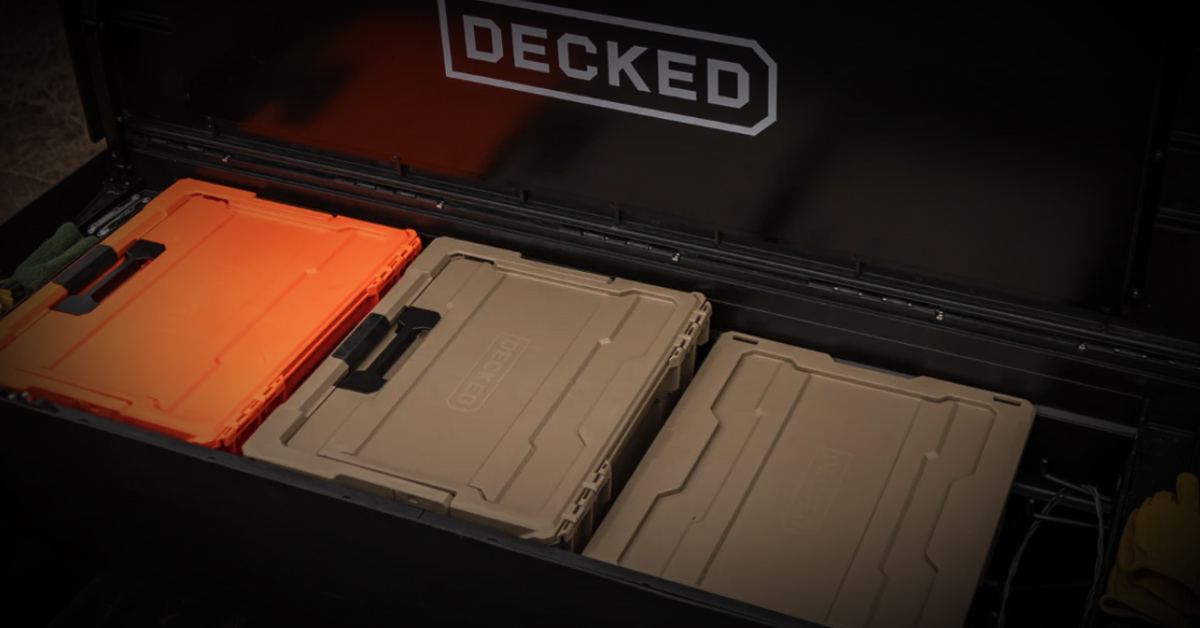
The graphics on a DECKED storage system perform multiple jobs.
- brand identity
- product information
- serial numbers
- long-term product identification
Every graphic becomes part of the customer experience. If the graphic fades, peels, or becomes unreadable, the product experience suffers. For a company built around durability, that was never acceptable.
DESIGNED
Plastic Is Difficult For Labels.
DECKED tested traditional label technologies. They failed.
The reason starts at the surface.
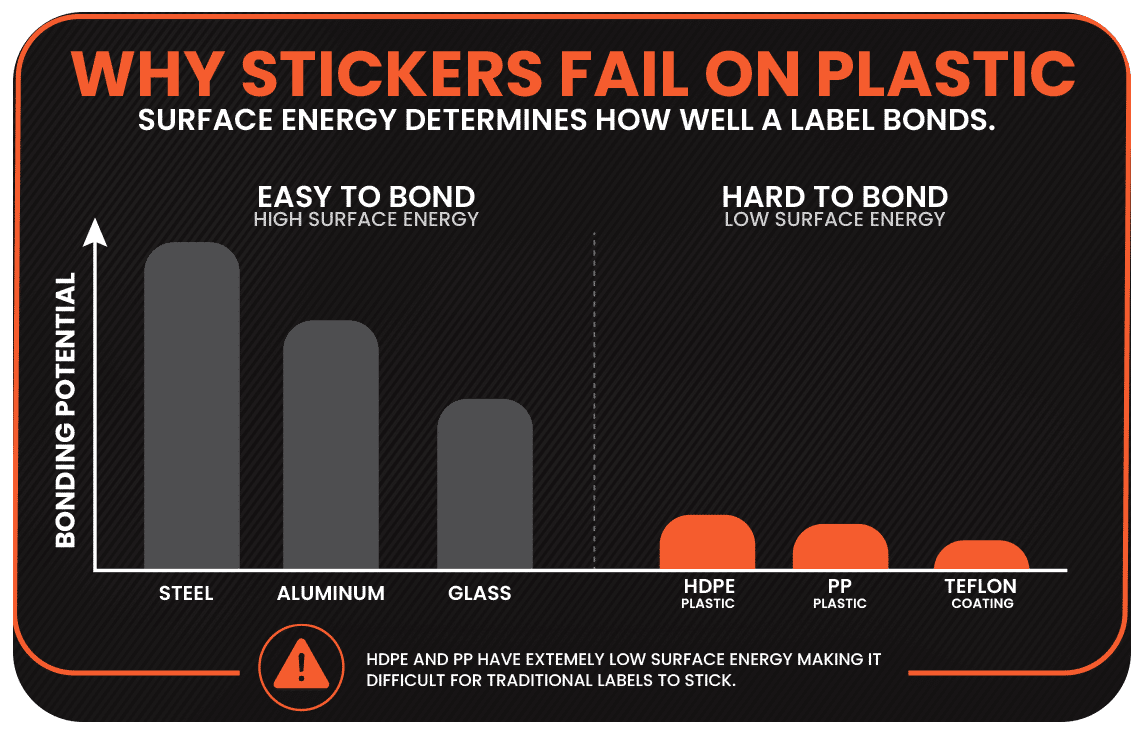
Polyolefin plastics have low surface energy, making it difficult for adhesives, inks, and coatings to form and maintain a durable bond. Add UV, temperature swings, abrasion, dirt, chemicals, and years of use, and the challenge only gets harder.
DECKED did not need a stronger sticker. They needed a different relationship between the graphic and the plastic.
Success Doesn’t Start With a Label.
Many companies discover Polyfuze after label failure becomes a problem.
DECKED took a different approach.
Their engineering team understood that branding, instructions, serial numbers, and product identification would become permanent parts of the customer experience.
Rather than waiting for failure, they designed for durability from the beginning.
How DECKED Brought Permanent Identity Into Production
Successful implementations do not begin with graphics. They begin with alignment between product requirements, materials, manufacturing processes, and long-term performance objectives.
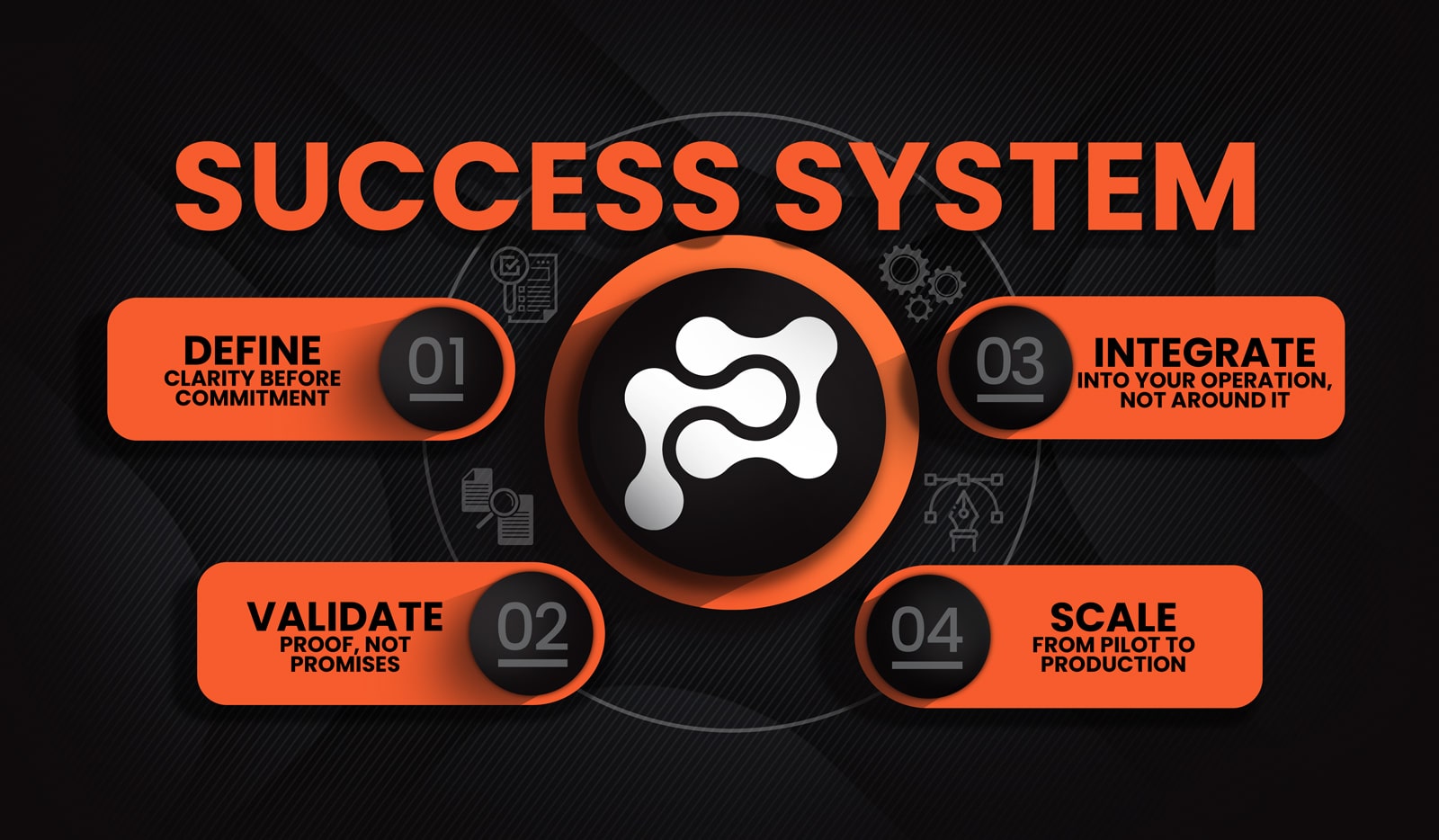
01 Define: Start With the Problem You’re Solving
DECKED wasn’t searching for a better sticker. The team was designing a premium truck storage system built around durability, performance, and long product life.
The challenge was defining what product identity needed to accomplish.
Before discussing equipment or graphics, the requirements were clearly defined.
02 Validate: Confirm Compatibility and Performance
Once requirements were established, the focus shifted to validation.
Material compatibility, graphic design, and manufacturing requirements were evaluated through testing. Because DECKED’s engineering team understood the importance of durable identity systems, validation was completed in weeks.
03 Integrate: Build It Into Production
Permanent identity only creates value when it can be consistently manufactured.
DECKED utilized our equipment network, operator training, process controls, and production workflows to ensure repeatable quality. Identity became part of the manufacturing process itself.
04 Scale: Support Growth and Future Products
Implementation did not end at launch. Today, Polyfuze continues to collaborate with DECKED’s engineering and design teams on new products, graphic enhancements, and future applications. We are both tinkerers.
VALIDATION
A Clear Choice for Engineers
Engineers Know What Good Looks Like. After evaluating Polyfuze, the DECKED team moved quickly. Testing validated what the engineering team expected: Polyfuze delivered the durability, appearance, and long-term performance they were seeking.
Within weeks, the decision was made. Unlike many projects, this wasn’t a replacement initiative. There was no failing label program to fix.
There was simply a decision to build the product correctly from the beginning.
Will Mono Material Labeling
Work For Me?
Will Mono Material
Labeling Work For Me?
Most labels solve the problem of attachment. Polyfuze solves the problem of material compatibility. Instead of using glue to bond dissimilar materials together, Polyfuze integrates identification into the plastic itself using heat and pressure.
Most labels solve the problem of attachment. Polyfuze solves the problem of material compatibility. Instead of using glue to bond dissimilar materials together, Polyfuze integrates identification into the plastic itself using heat and pressure.
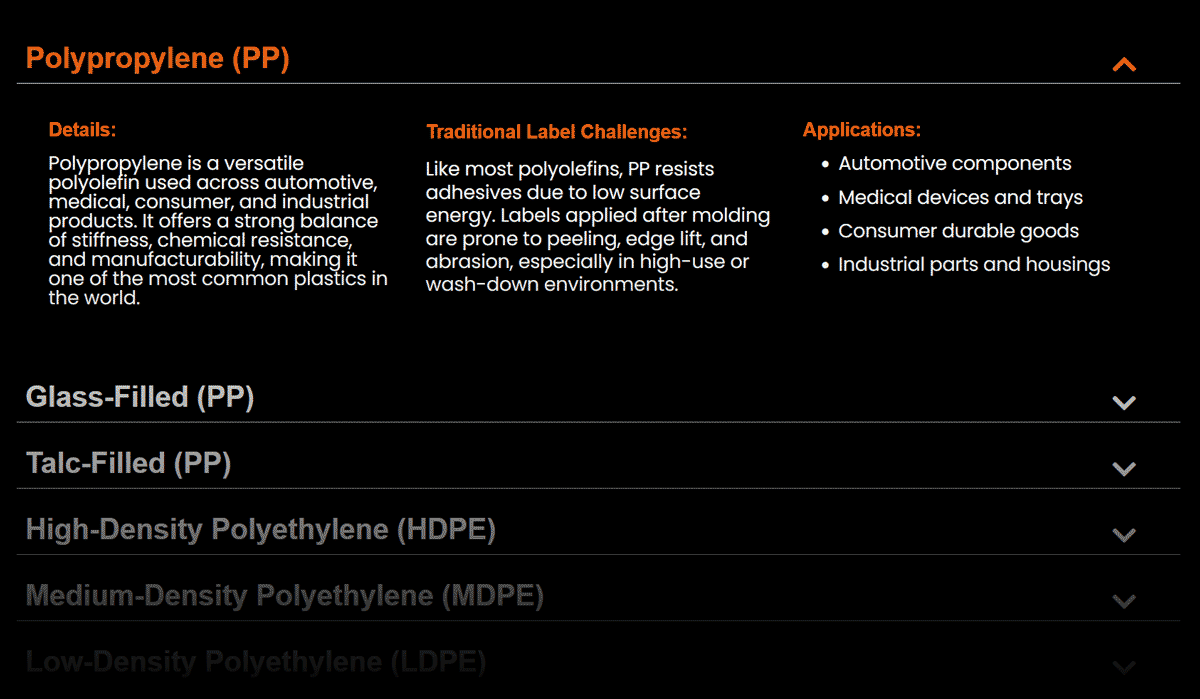
Designing Around Material Compatibility
MATERIALS
Choosing the Right Material for the Long Term. As the product evolved, DECKED transitioned from polycarbonate to Glass Filled PP for some parts. The decision improved compatibility with Polyfuze and aligned with the company’s long-term approach to durability and manufacturing performance.
The result is a permanent mono-material identity structure engineered to perform alongside the product itself.
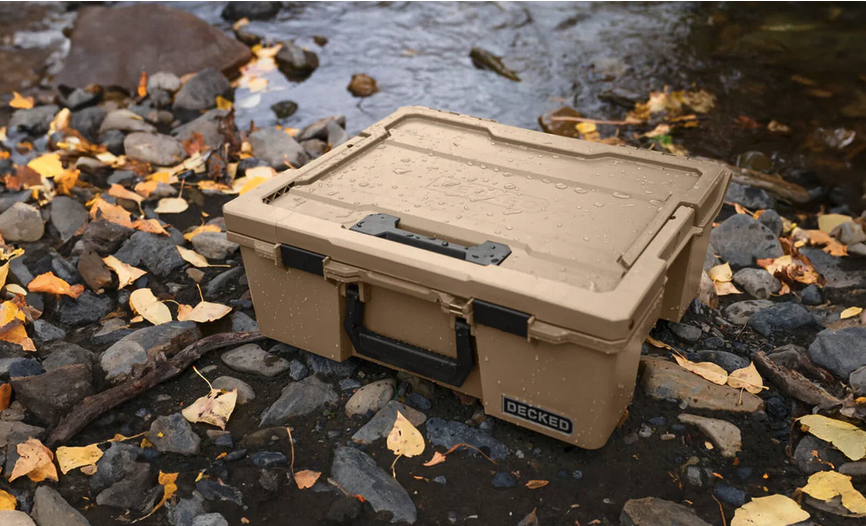
When Durability Is The Brand
Customers purchase DECKED products because they expect durability.
The identity system should reinforce that expectation, not become the weakest layer in the product.
By integrating identity directly into the material itself, DECKED aligned branding, instructions, serial numbers, and product identification with the same durability standards used throughout the rest of the product.
Outcomes:
- Permanent branding
- Durable instruction graphics
- Long-term serial number readability
- Material-integrated identity
- Production-ready implementation
- Ongoing design collaboration
- Identity aligned with product durability
About Polyfuze
Polyfuze’s revolutionary Mono Material labeling technology represents a major breakthrough in sustainable industrial packaging. Unlike traditional labels that use incompatible materials and adhesives, Polyfuze permanently fuses branding, barcodes, RFID and compliance information directly into the surface of polyolefin products like HDPE and PP.
The result is a label that never peels, fades, or contaminates the recycling stream—ensuring full compatibility with closed-loop and circular economy goals.
Engineered for demanding use cases such as pallets, totes, crates, and IBCs, Polyfuze empowers OEMs and end users to meet rising sustainability standards without sacrificing durability, traceability, or performance. As the only labeling solution of its kind, Polyfuze is redefining what’s possible in recyclable, reusable packaging.
Established in 1983, we bring over four decades of expertise in plastics labeling and graphics. Our founder’s entrepreneurial spirit remains a driving force in our culture, fueling a commitment to innovation that begins with listening closely to our customers.
Tell us about your application and we’ll help you determine if Polyfuze is the right fit.
We’ll review:
- Material compatibility
- Labeling method
- Volume and scale
- Implementation approach