


Case Study.
When Identity Is Exposed to Reality,
It Fails First
Why Products Built for Abuse Still Carry
Fragile Identity Systems
1. Products Designed for Harsh Environments Rarely Fail In Controlled Testing Environments
They fail in the field.
Professional tools are dropped onto concrete floors, covered in oils and chemicals, dragged across job sites, and used thousands of times under high mechanical stress. Outdoor products face years of UV exposure, moisture, abrasion, mud, saltwater, and temperature extremes. Marine equipment operates continuously in environments specifically designed by nature to destroy materials over time.
And yet, across many of these products, the first thing to disappear is not the product itself.
It is the identity, the brand, the serial#, attached to it.
Manufacturers including tool brands, outdoor product companies, marine equipment suppliers, and durable consumer goods companies faced the same recurring issue: traditional labels and surface graphics degraded long before the product reached end of life.
The products continued performing exactly as designed. The branding, warnings, and identification systems did not.
2. Built For Abuse
The environments these products operate within are exceptionally unforgiving.
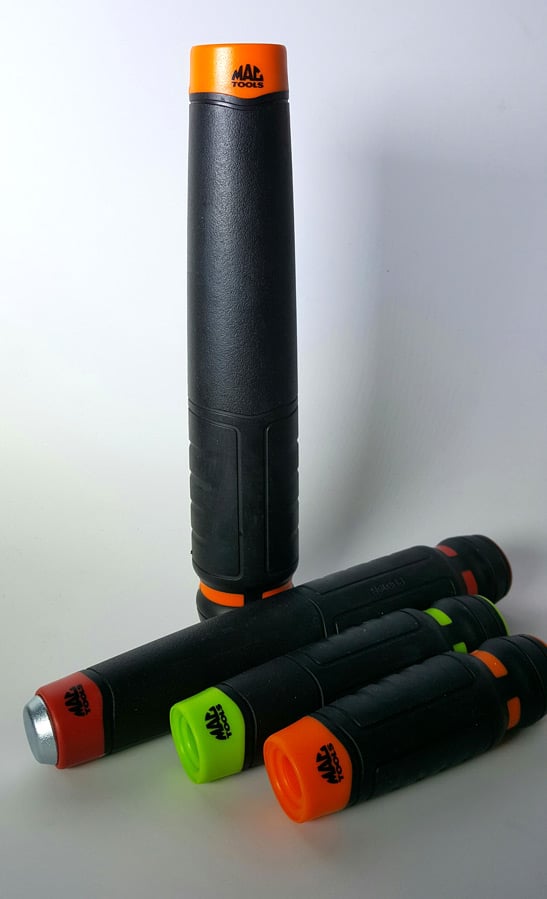
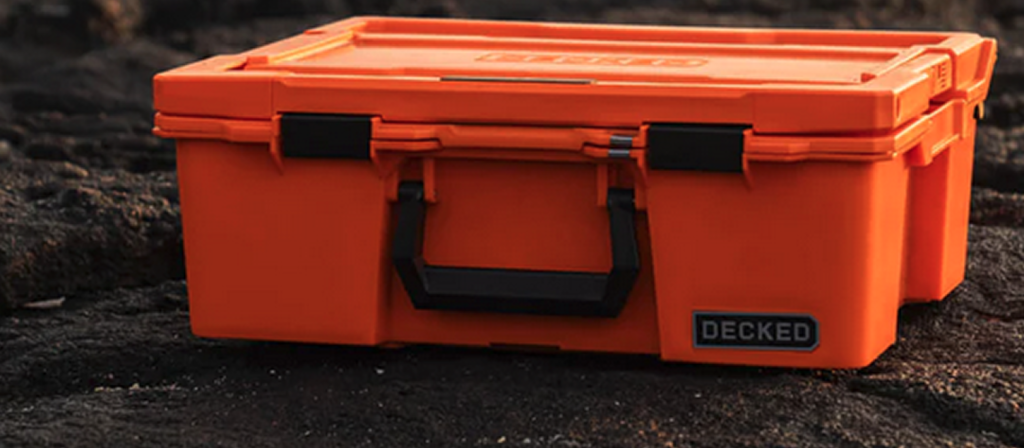
Professional tool manufacturers such as Mayhew Steel Products and Mac Tools produce products expected to survive years of repetitive impact, abrasion, chemical exposure, and physical handling. Outdoor brands including YETI, Pelican, and DECKED engineer products specifically around long-term durability expectations tied to rugged consumer and commercial use.
In marine environments, the challenge becomes even more extreme. Ocean monitoring buoys manufactured for long-term deployment face constant UV exposure, saltwater, impact, and weather conditions that degrade most traditional graphics systems rapidly over time.
These are not abnormal conditions. They are the intended operating environments of the product itself.
That distinction matters because most traditional labels and graphics systems were never designed for this level of exposure over extended operational lifecycles.

3. The First Things To Fail
In many cases, degradation begins long before the product itself shows meaningful wear.
Logos fade. Product markings become unreadable. Safety information disappears. Surface graphics peel, chip, or erode under repeated environmental stress. Over time, the product loses its visible identity even while the structure underneath remains fully functional.
That creates both operational and brand challenges.
For manufacturers, identity is not merely cosmetic. Branding reinforces quality perception. Product markings support traceability and warranty management. Safety messaging and instructional graphics often remain important throughout the usable life of the product.
When those systems disappear prematurely, the product itself begins communicating unintended signals about quality and durability.
The irony is difficult to ignore: products engineered to survive extreme environments often rely on identity systems designed primarily for controlled conditions.
4. The Structural Mismatch
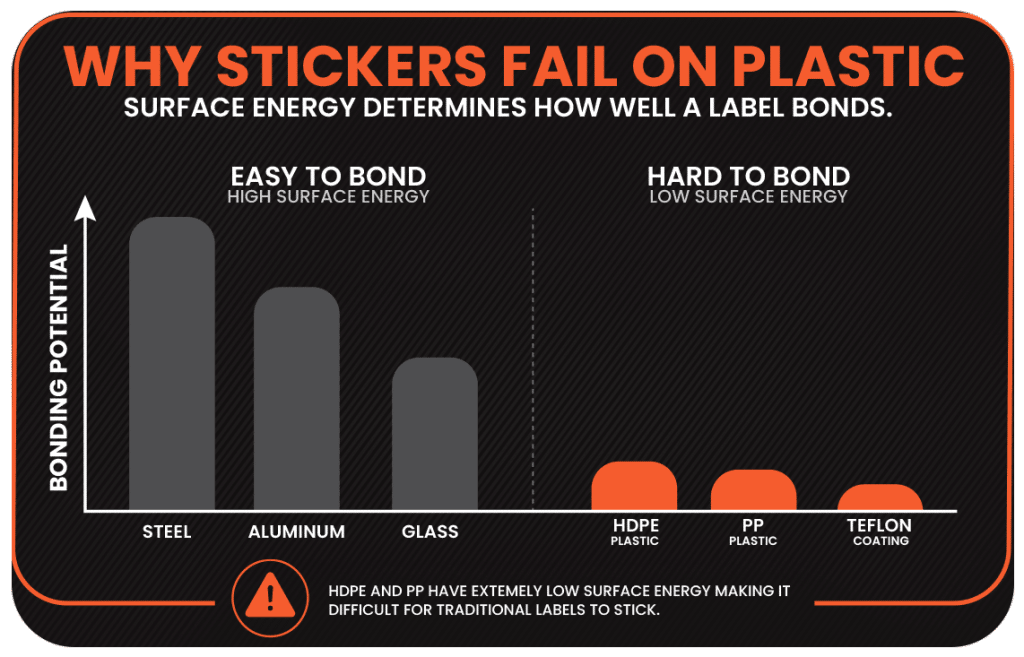
Most of these products are manufactured from polyolefins and engineered polymers selected specifically for their long-term durability and environmental resistance. Materials such as polypropylene, HDPE, elastomers, and TPO perform exceptionally well under impact, chemical exposure, moisture, and UV conditions.
But those same materials are notoriously difficult for traditional labels and inks.
Low-surface-energy plastics resist adhesion by design. To compensate, manufacturers often rely on flame treatment, surface pretreatment, aggressive adhesives, or multi-layer labeling constructions that introduce additional failure points into already harsh operating environments.
Over time, the mismatch becomes predictable. The product survives. The surface identity does not.
5. Engineering Identity To Survive the Same Environment
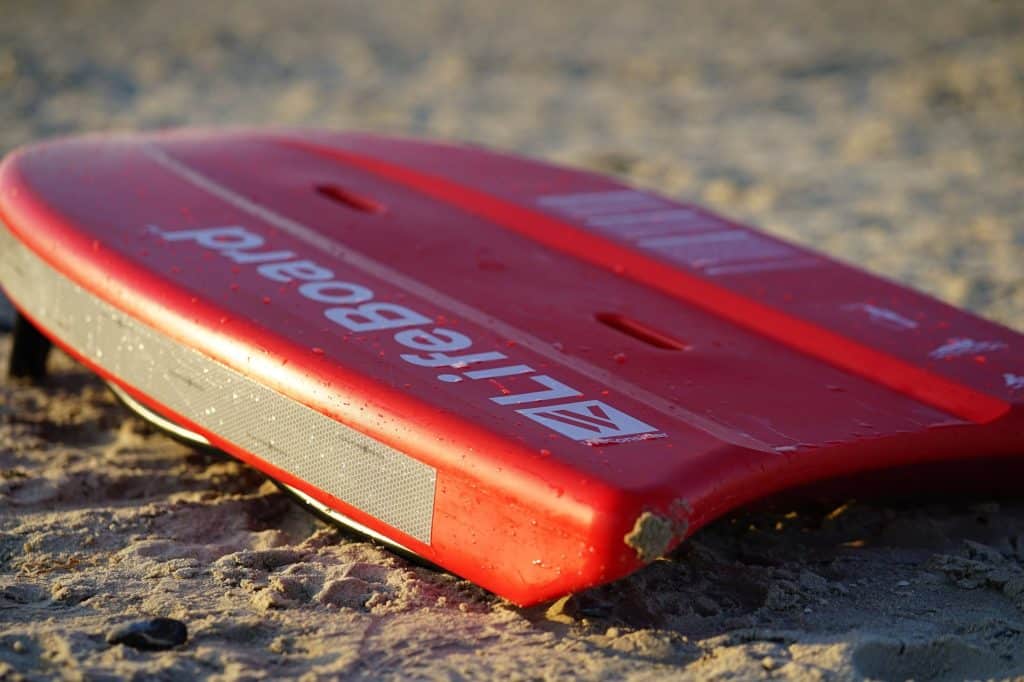
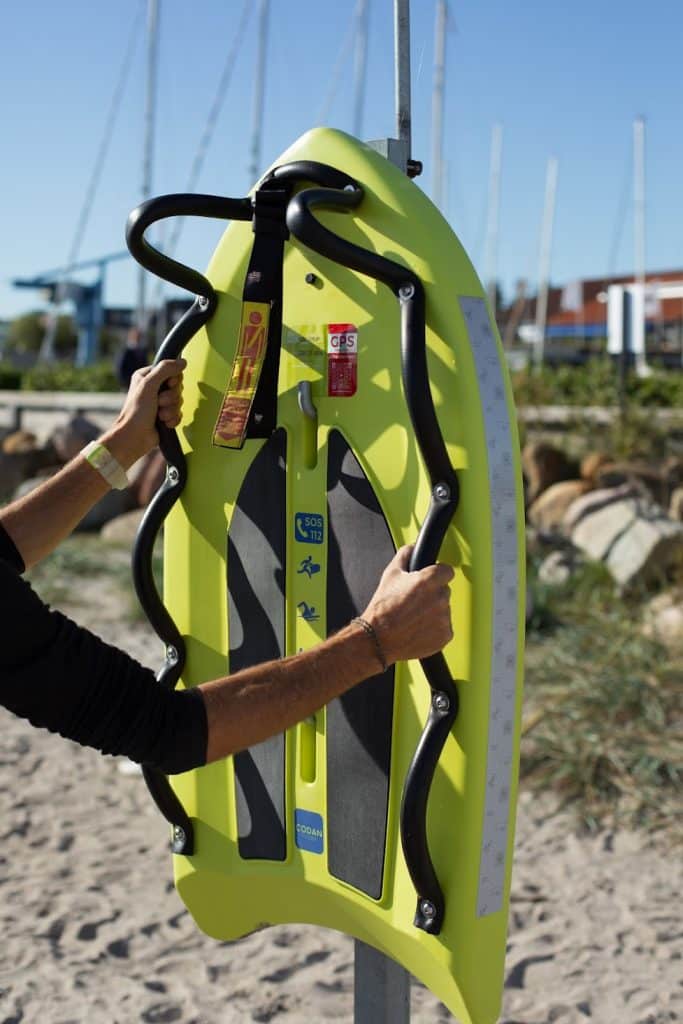
Rather than improving the label itself, Polyfuze eliminated the label layer entirely.
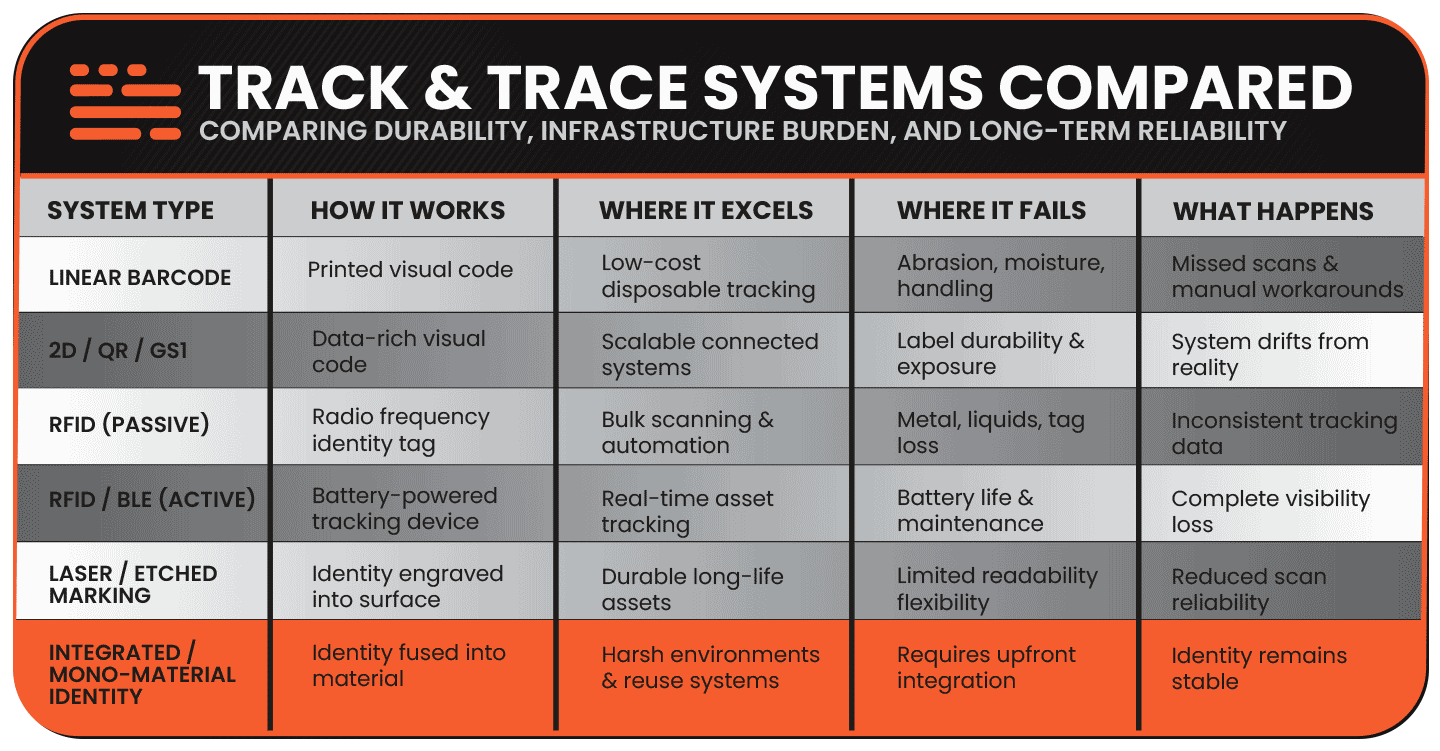
Using heat and pressure, Polyfuze permanently fused graphics, branding, and identification directly into the polymer structure of the product. The resulting mono-material system removed many of the traditional failure pathways associated with adhesive-based graphics:
- no peeling edges
- no adhesive breakdown
- no secondary surface layer
- no degradation interface between the product and the identity system
Because the identity became integrated into the material structure itself, the graphics aged alongside the product rather than independently from it.
The identity system now behaved like the product it was attached to.
6. The Economics of Identity Durability
Durable products create long operational lifecycles. But when branding and identification degrade early, manufacturers often absorb hidden downstream costs tied to replacement, warranty concerns, reduced perceived product quality, and inconsistent field appearance.
Operationally, many traditional graphics systems also introduce added production complexity through flame treatment, secondary preparation processes, or increased scrap rates tied to adhesion inconsistency.
By integrating identity directly into the material structure, manufacturers reduced:
- relabeling requirements
- pretreatment dependency
- graphics replacement cycles
- production complexity
- long-term degradation issues in the field
Equally important, permanent identity reinforced the core value proposition these brands were already selling: durability.
For premium brands, visible durability matters. If the branding disappears first, the product experience becomes inconsistent with the engineering story behind it.

7. The Larger Industry Insight
Products are tested in laboratories. Identity systems are tested in reality.
And reality is far harsher.
This case highlights a broader issue across industrial, marine, outdoor, and professional product markets: manufacturers routinely engineer products for decades of abuse while relying on identity systems designed for dramatically shorter lifecycle assumptions.
As durable products continue moving into harsher and longer-life environments, identity durability will increasingly become part of product engineering itself — not merely a graphics decision made late in manufacturing.
Because if the product survives but the identity does not, the system was never fully designed for the environment it was built to endure.
Estimate Your Avoidable
Labeling Costs
See how label failure, replacement, and labor costs add up over time.

Industry Leaders Choose The Polyfuze Advantage































About Polyfuze
Polyfuze’s revolutionary Mono Material labeling technology represents a major breakthrough in sustainable industrial packaging. Unlike traditional labels that use incompatible materials and adhesives, Polyfuze permanently fuses branding, barcodes, RFID and compliance information directly into the surface of polyolefin products like HDPE and PP.
The result is a label that never peels, fades, or contaminates the recycling stream—ensuring full compatibility with closed-loop and circular economy goals.
Engineered for demanding use cases such as pallets, totes, crates, and IBCs, Polyfuze empowers OEMs and end users to meet rising sustainability standards without sacrificing durability, traceability, or performance. As the only labeling solution of its kind, Polyfuze is redefining what’s possible in recyclable, reusable packaging.
Established in 1983, we bring over four decades of expertise in plastics labeling and graphics. Our founder’s entrepreneurial spirit remains a driving force in our culture, fueling a commitment to innovation that begins with listening closely to our customers.
Tell us about your application and we’ll help you determine if Polyfuze is the right fit.
We’ll review:
- Material compatibility
- Labeling method
- Volume and scale
- Implementation approach