Resources for the
Future of Labeling Plastics
Understand mono material label performance in real-world
conditions — from automotive to outdoor equipment — with
data-backed case studies and technical deep dives.
Resources for the
Future
of Labeling
Understand how mono material labeling performs in real-world conditions — from automotive to outdoor equipment — with data-backed case studies and technical deep dives.
Industry Intelligence & Resources
Polymer Fusion Technology Research, News & Training
Case Studies
Deep Dives
Technical Data Sheets
FAQs
What is mono material labeling?
Mono material labeling is a labeling system where the label and the plastic product share the same or fully compatible polymer family. Because there are no adhesives, inks, films, or foreign materials, the label does not contaminate recycling streams and can be processed together with the plastic part. Learn How It Works here.
How is mono material labeling different from traditional labels or stickers?
Traditional labels rely on adhesives, inks, or multilayer films that sit on the surface of plastic parts. These materials fail under heat, washing, UV exposure, or abrasion, and they contaminate recycling. Mono material labels bond molecularly with the plastic surface, creating a permanent mark that won’t peel, crack, or interfere with recyclability. Learn How It Works here.
Is mono material labeling the same as in-mold labeling (IML)?
No. IML applies a printed film into a mold, but it is still a separate material attached to the plastic part. It can delaminate, fade, and still contaminate recycling. Mono material labeling creates a single-material outcome that becomes part of the plastic itself. IML is an application method; mono material is a material compatibility standard. Learn about application solutions here.
How permanent is mono material labeling?
Mono material labels are engineered to last the entire life of the plastic part. Because the label becomes structurally integrated, it does not peel, flake, degrade, or release under mechanical or environmental stress. Learn about performance data here.
Which plastics are compatible with mono material labeling (HDPE, PP, TPO, etc.)?
Compatible plastics include HDPE, PP, TPO, UHMWPE, and other low-surface-energy polyolefins, materials that traditional labels struggle with. Learn about material compatibility here.
Why do adhesives and inks fail on low-surface energy plastics?
Plastics like HDPE and PP are engineered to repel adhesives and coatings. Their low surface energy prevents traditional labels from forming a strong bond, leading to peeling, cracking, and short service life. Learn “why plastics are difficult for labels” here.
Can mono material labels be recycled with the plastic part?
Yes. Because the label and the substrate share compatible polymer chemistry, they recycle as a single material, without contamination. This is key for compliance with PPWR, SB 343, and many EPR frameworks. Learn how Polyfuze aligns with reusability here.
How is Polyfuze’s mono material labeling system different from standard industrial labels?
Polyfuze uses a patented process that creates a chemically compatible, single-material integration—achieved without adhesives, inks, or films. This enables unmatched durability, sustainability, and traceability. Learn how Polyfuze works here.
Is mono material labeling food-safe?
Yes. Polyfuze monomaterial labels use FDA-compliant materials suitable for food-contact plastics depending on application and resin type Learn about Polyfuze performance data here.
How long can mono material labels last in demanding conditions?
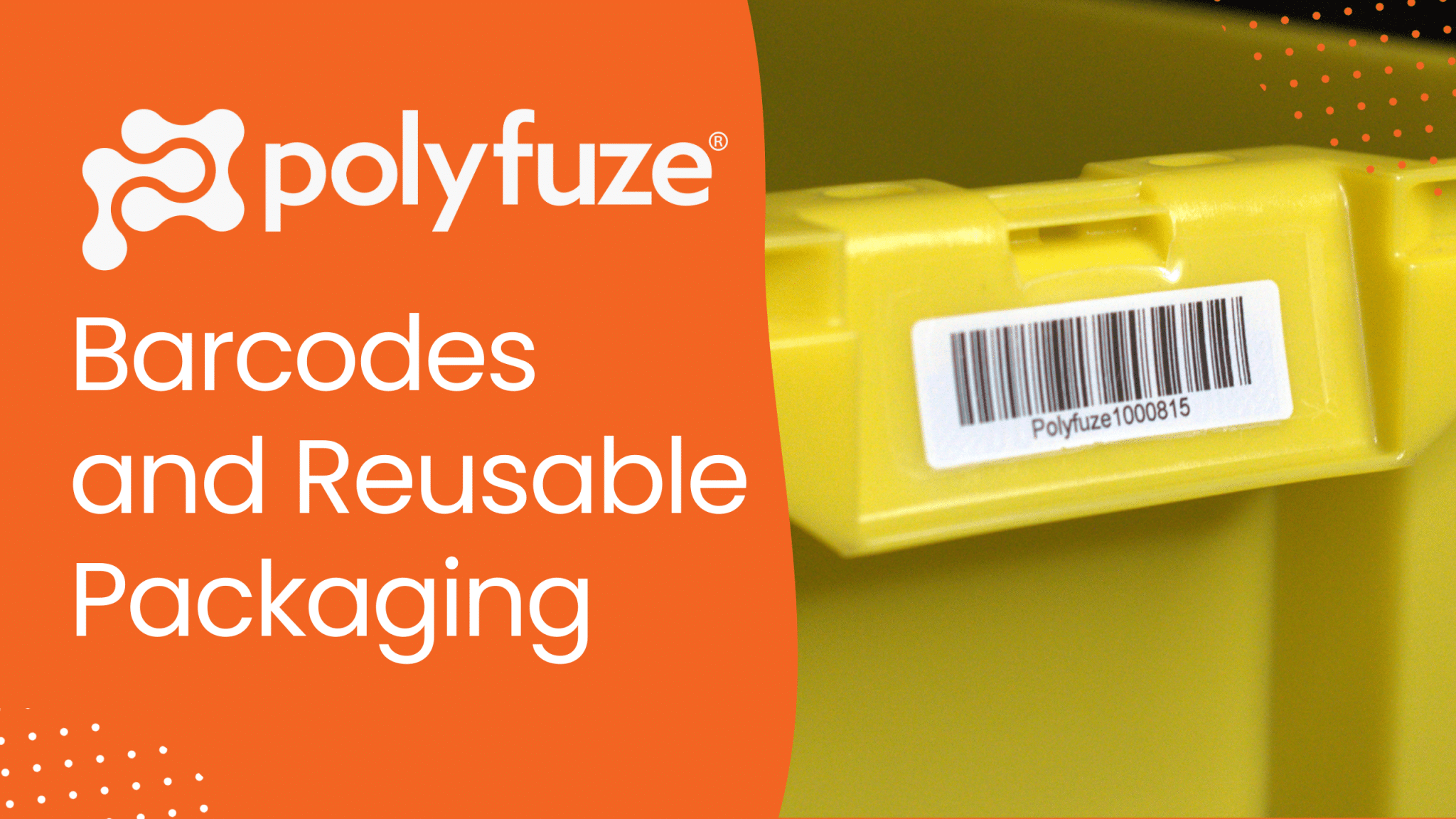
Years to decades. They endure harsh environments; UV, abrasion, chemicals, heat, sanitation—without loss of readability or bond strength. Learn about Polyfuze reusable packaging solutions here.
What makes a label “mono material”?
A label is monomaterial when its polymer composition is chemically compatible with the product’s substrate, allowing it to fuse or integrate into the plastic. This prevents failure and supports full recyclability. Learn about Polyfuze material compatibility here.
How does Polyfuze achieve a mono material bond?
Polyfuze uses a patented thermal and molecular integration process that activates polymer chains between the label and substrate. This results in a permanent mono material outcome, not a surface bond. Learn how it works here.
What manufacturing processes are compatible with mono material labeling?
Polyfuze monomaterial labels are compatible with:
- Injection molding
- Blow molding
- Rotational molding
- Extrusion molding
How is the quality of a mono material bond validated?
Can mono material labels withstand chemicals or solvents? View performance data here.
How do they perform under washdown, sterilization, or sanitation?
Polyfuze labels are designed for 160°F+ wash cycles, repeated sanitation, and long-term exposure to caustics—ideal for reusable packaging or food processing. Learn about Polyfuze in reusable packaging solutions here.
Are monomaterial labels UV-resistant?
Yes. Polyfuze uses UV-stable pigments and polymer systems engineered for extended outdoor exposure. Learn about Polyfuze performance data here.
Are monomaterial labels abrasion-resistant?
Mono material labels resist mechanical abrasion because they are not a surface layer—they are part of the plastic itself. Learn about Polyfuze performance data here.
Will mono material labels crack, fade, or peel?
No. There are no adhesives or films to peel, and pigments are integrated into the polymer structure. Learn about Polyfuze compared to other labels here.
Can mono material labels survive years of outdoor exposure?
Yes. Polyfuze labels outperform traditional labels in UV, temperature swing, and mechanical stress scenarios. Learn about Polyfuze in Recreational Equipment use here.
Are mono material labels suitable for aerospace or safety-critical products?
Yes. They maintain permanence under high stress and extreme environmental conditions required in aerospace safety systems. Learn about Polyfuze in Aerospace Safety systems use here.
Do mono material labels work in extreme temperatures?
Yes. They perform above 200°F and below freezing without bond failure. Learn about Polyfuze performance data here.
What plastics are mono material labels compatible with?
HDPE, PP, TPO, and UHMWPE (polyolefins), plastics known for low surface energy and hard-to-label surfaces. Learn about Polyfuze material compatibility here.
Do mono material labels work on textured or uneven surfaces?
Yes. Monomaterial integration works on smooth, matte, textured, or lightly grained surfaces. Learn about Polyfuze manufacturing types here.
Do mono material labels work with recycled or regrind materials?
Yes. Polyfuze labels integrate well with many recycled polyolefin streams. Learn about Polyfuze for sustainability here.
What types of plastic are not compatible?
Most non-polyolefin plastics like nylon, PC, PET, and ABS are not compatible today. Learn about Polyfuze material compatibility here.
Do colorants or additives impact performance?
Yes. Slip agents, mold release, and anti-fungal additives may interfere with polymer bonding and should be reviewed with our experts. Learn about Polyfuze performance data here.
Buyer Information
We welcome customers’ Mutual Non-Disclosure Agreements, provided they incorporate our required paragraph:
Reverse Engineering Clause: The parties agree not to reverse engineer or analyze each other’s products, including raw material labels / graphics. This prohibition, aimed specifically at Polyfuze® Graphics Corporation’s / Mold In Graphic Systems® polymer fusion labeling technology as their proprietary Intellectual Property, must be in perpetuity.
Buyer Information Packet:
Essential details to guide you through our process and offerings.
Mutual Non-Disclosure Agreement:
If you do not have one, use ours here.
Credit Application Form:
Essential for initiating your credit evaluation.
New Customer Order Form:
Essential for initiating your Ordering process with us.
Compliance & Ethics

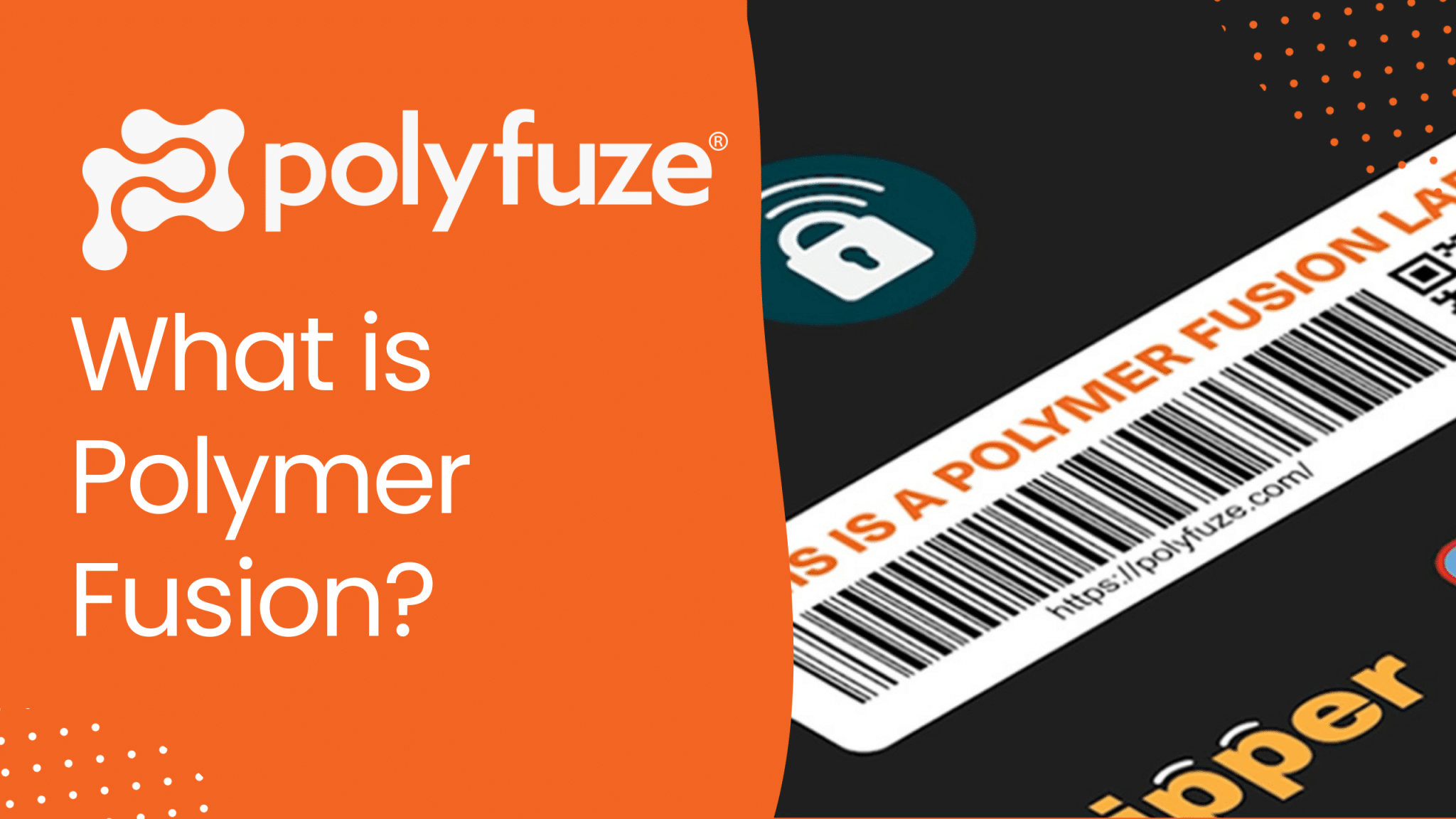
Will Mono Material
Labeling Work For Me
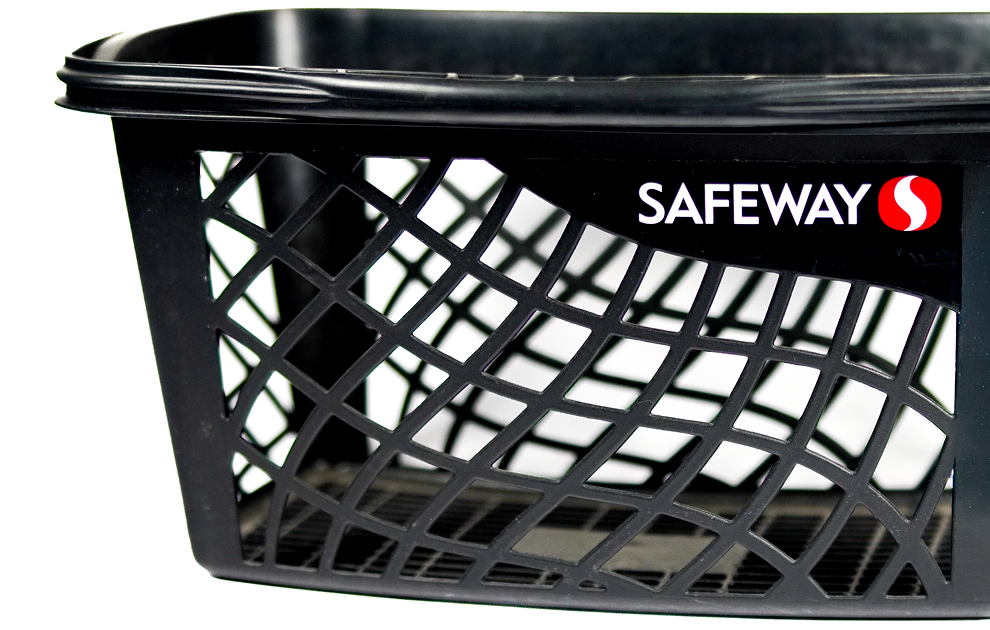
Most labels solve the problem of attachment. Polyfuze solves the problem of material compatibility. Instead of using glue to bond dissimilar materials together, Polyfuze integrates identification into the plastic itself using heat and pressure.
Will Mono Material
Labeling Work For Me
Most labels solve the problem of attachment. Polyfuze solves the problem of material compatibility. Instead of using glue to bond dissimilar materials together, Polyfuze integrates identification into the plastic itself using heat and pressure.
Compare Mono Material to
Traditional Labels
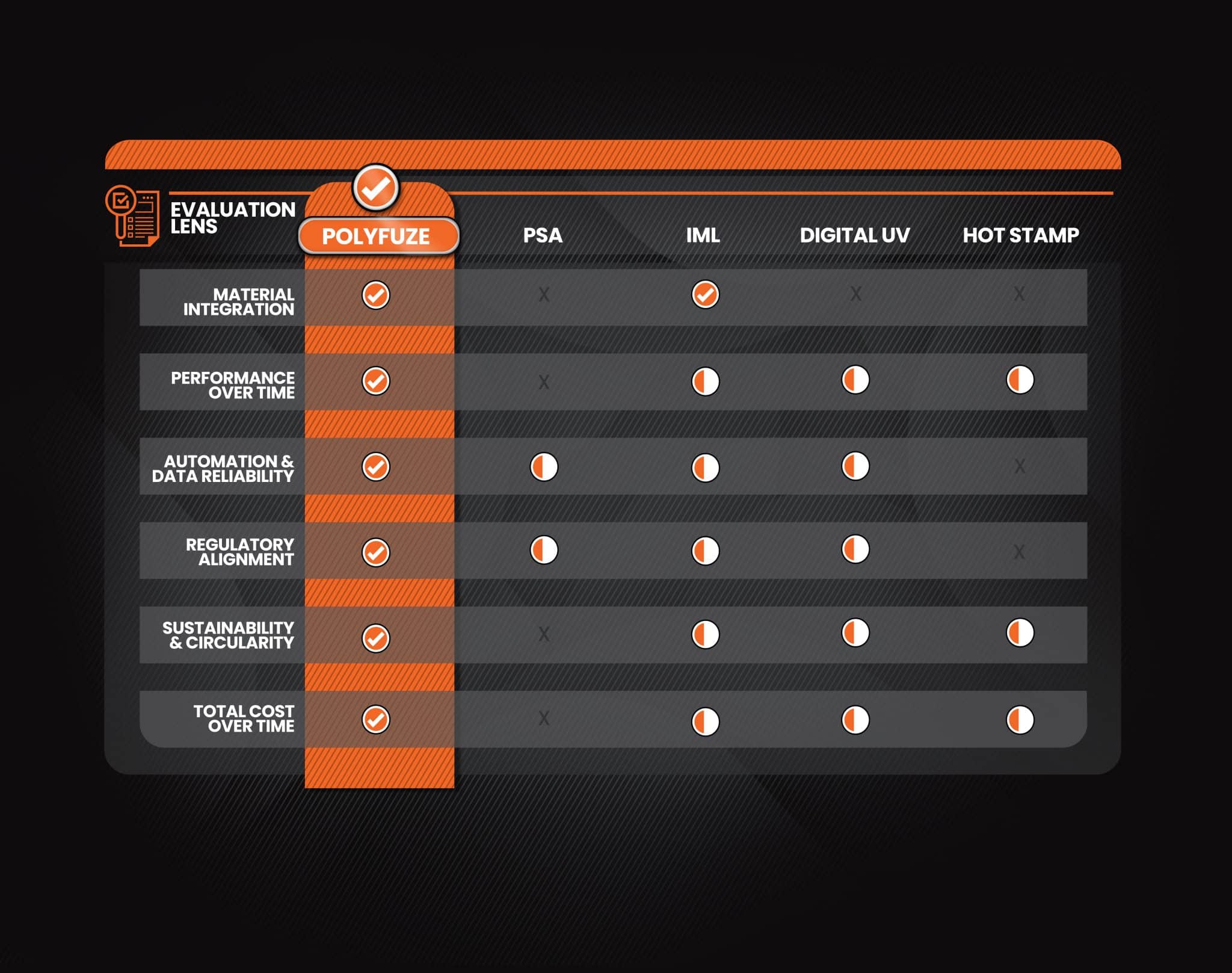
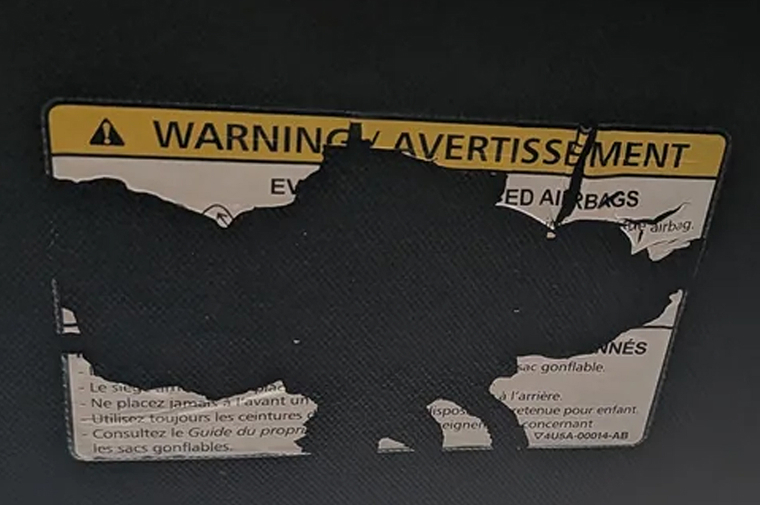
Label performance is best measured by time. Exposure to chemical and environmental factors impact label integrity. Old ASTM standards fall short of modern expectations.
Will Mono Material
Labeling Work For Me
Label performance is best measured by time. Exposure to chemical and environmental factors impact label integrity. Old ASTM standards fall short of modern expectations.
Compare Mono Material to
Traditional Labels
Compare Mono Material to
Traditional Labels
Label performance is best measured by time. Exposure to chemical and environmental factors impact label integrity. Old ASTM standards fall short of modern expectations.
Old Standards
Polyfuze Solution

Estimate Your Avoidable
Labeling Costs
See how label failure, replacement, and labor costs add up over time.
Adjust a few inputs to generate a 10-year cost range and compare traditional labeling with fixed Polyfuze performance.
The Paradox of Plastic
Polyolefin materials are engineered to resist everything. That resistance makes them nearly impossible to mark permanently…until Polyfuze changed the equation.
The People Behind
the Innovation
The People Behind
the Innovation
Polyfuze is built on a culture of curiosity, collaboration, and care — where science and creativity meet sustainability.
Polyfuze is built on a culture of curiosity, collaboration, and care — where science and creativity meet sustainability.